ServicesWhole-Home Filtration
Whole-Home Filtration in Dade City
We put whole-home filtration on the main supply line, ahead of every fixture, so the shower, the washer and the kitchen tap all draw treated water. Each system is matched to your pipe size and flow rate, then plumbed with a bypass valve, a code-correct drain and a bonding jumper.
What a point-of-entry filter does
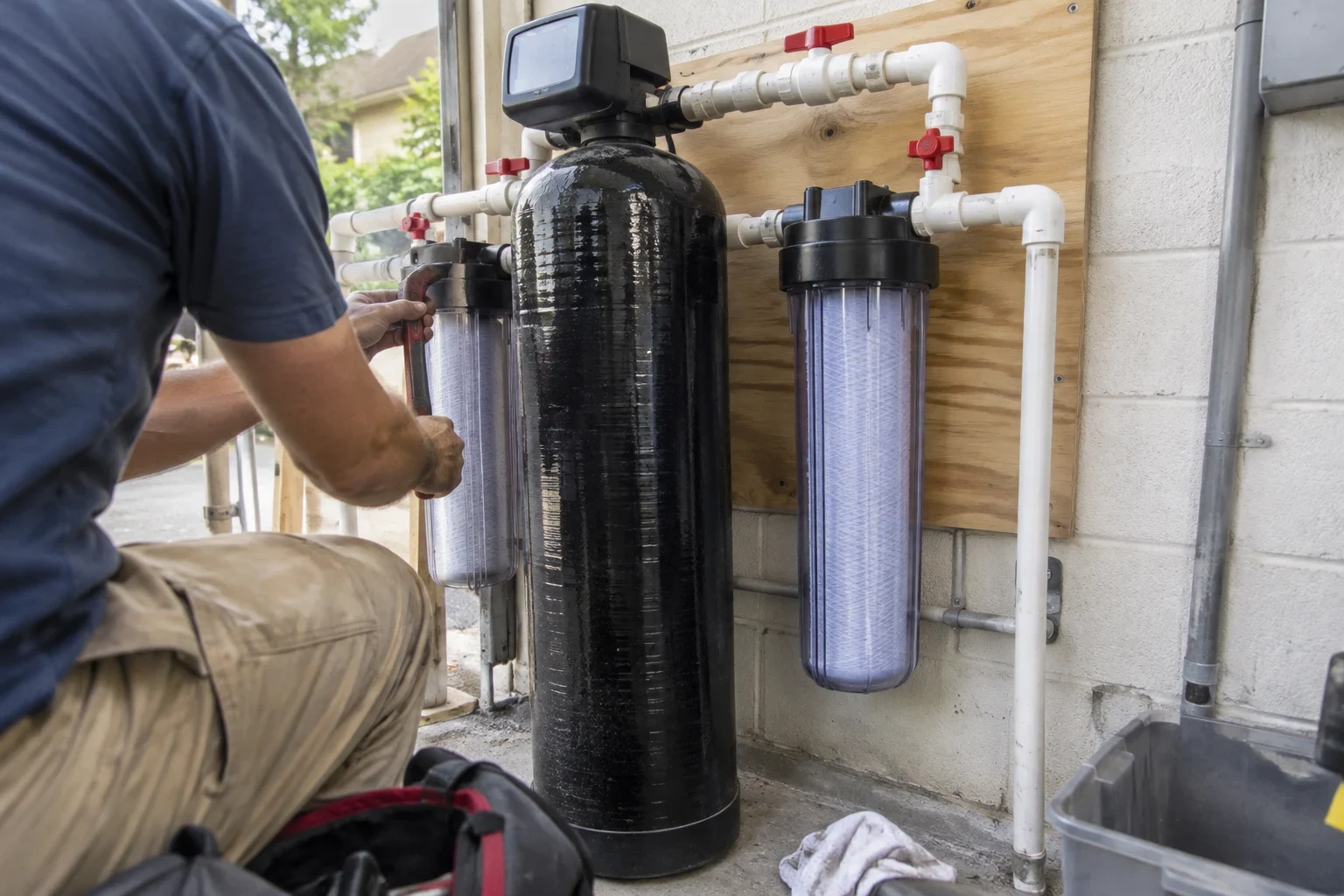
A point-of-entry system sits on the cold main line, right after the shutoff and before the water heater. Most setups we put in combine a sediment prefilter that catches grit with a tank of granular activated carbon, which holds onto chlorine, the tastes and odors that come with it, and many organic chemicals. Since all the water entering the house passes through that tank first, the change shows up at the bathroom sink and the washing machine, not only at the glass you drink from.
It fits best when the problem is in every room: a pool odor at each faucet, skin that feels tight after showering, or sand showing up in aerators and toilet tanks. It will not soften water, because carbon does not remove calcium and magnesium; if scale is your main concern, see our Water Softeners page. For drinking water taken a step further, pair it with Reverse Osmosis at the kitchen sink.
Central Florida's limestone aquifer can deliver hardness and chlorine together, so we start by asking what you are actually noticing before recommending equipment. You get a single straight answer on the right system and why it fits.
What the installation includes
- Sizing to your flow rate
- We count bathrooms and fixtures, check the diameter of your main and choose a tank that keeps up with peak demand. A tank that is too small sags pressure when two showers run, and it pushes water through the carbon too fast for good contact time.
- Sediment prefilter
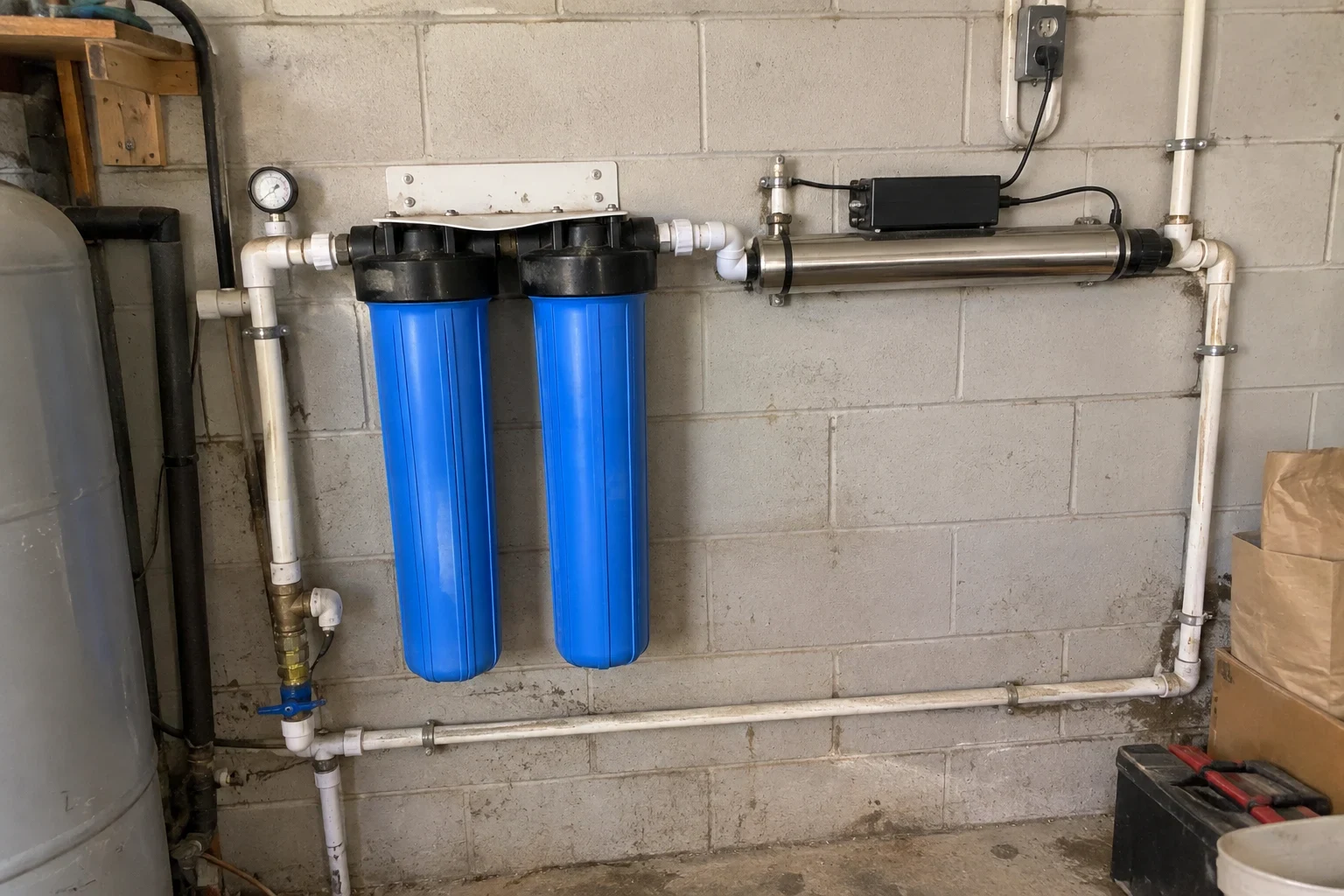
- A cartridge prefilter, usually 5 to 20 micron, shields the carbon bed from sand and loose scale. That stretches the life of the carbon and keeps debris out of the control valve.
- Three-valve bypass
- We plumb a bypass so the system can be isolated for media changes or service while water to your home stays on. It also lets you send water around the filter for uses like outdoor irrigation if you want.
- Drain line with air gap
- Backwashing tanks send rinse water to a drain. Code calls for an open air gap between that line and the drain so wastewater has no path back into your supply, and that is how we set it up on every job.
- Bonding jumper
- Where metal water pipe serves as part of your electrical ground, a section of plastic fittings and a fiberglass tank interrupts that path. A copper jumper bridges the new equipment so grounding stays intact.
- Permit, flush and cleanup
- Where the city or Pasco County requires one for the work, we pull the permit and schedule the inspection. We flush the system, check for leaks and haul away packaging and pipe offcuts before we leave.
Signs your home could use whole-home filtration
Chlorine smell at every tap
If the bleach odor is as strong at the bathroom sink as in the kitchen, a faucet-mounted filter will not fix it. Carbon on the main line treats it everywhere at once.
Dry skin and hair after showers
Chlorine in warm shower water is easy to smell and can leave skin feeling tight. Treating water at the point of entry removes it before it ever reaches the water heater.
Grit in aerators and toilet tanks
Sand collecting in faucet screens means particles are coming in with the supply. The sediment prefilter traps them ahead of valves, faucet cartridges and appliance inlets, where they cause wear.
Pitchers and fridge filters that never keep up
Swapping small cartridges every few weeks is a sign the issue goes beyond drinking water. One system on the main takes over that chore.
An old system that stopped working
Carbon exhausts over time and the taste creeps back. If you already have a tank and the smell has returned, our Water Softener & Filtration System Replacement page explains when fresh media is enough and when the whole unit should be swapped.
How installation day runs
- 1
Phone conversation first
We talk through what you notice, how big your home is and where the main line comes in. That tells us which tank, fittings and pipe material to load on the truck.
- 2
Site check and shutoff
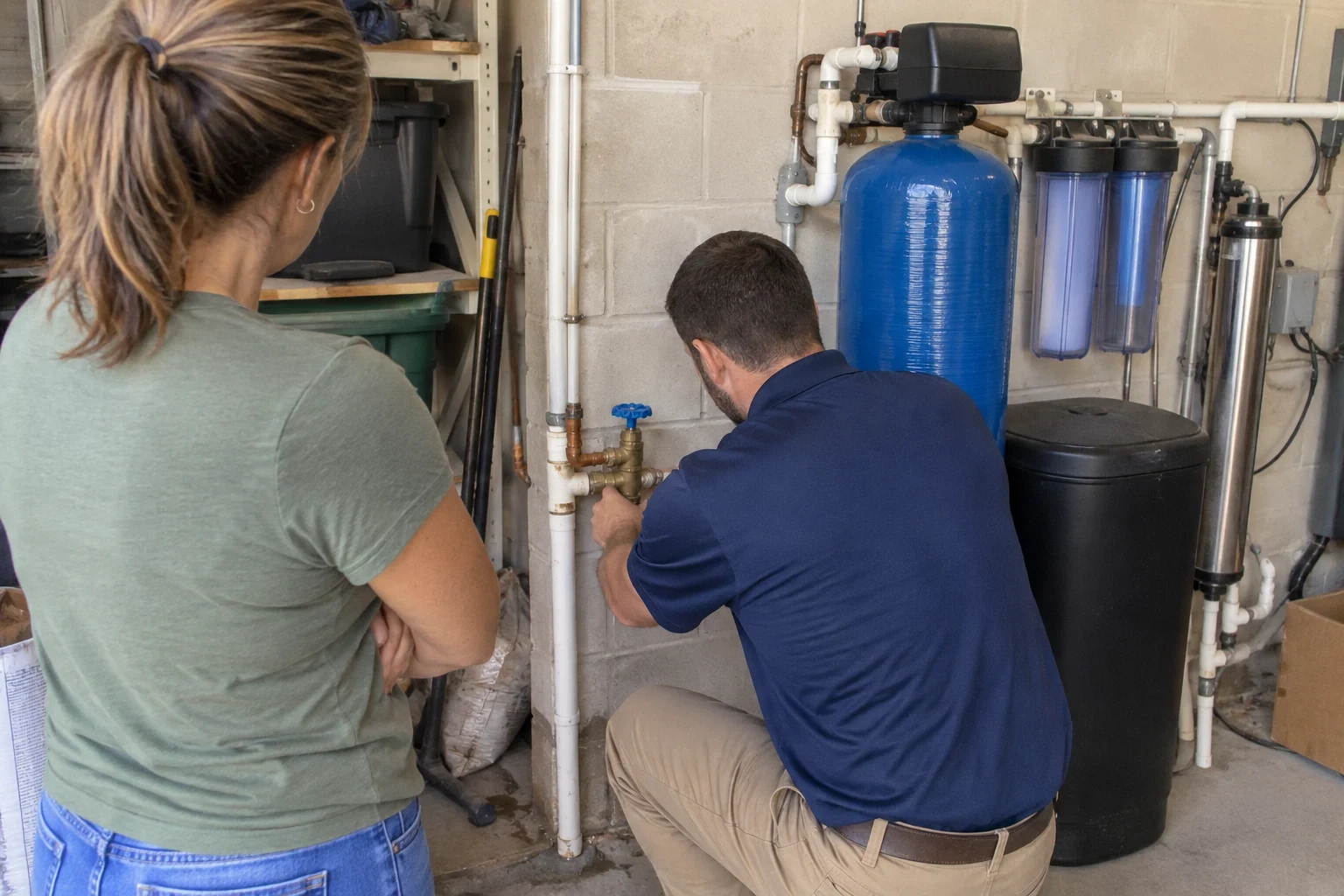
We confirm the mounting spot, usually a garage wall or utility area near the main, and look for a nearby drain and room to service the tank later. Then we close the shutoff and bleed off pressure.
- 3
Cut-in and plumbing
We cut into the main, set the bypass and connect the prefilter and tank with fittings matched to your CPVC, copper or PEX. The drain line goes in with its air gap, and the bonding jumper is clamped across the system.
- 4
Flush, test and walkthrough
New carbon releases fine particles on its first use, so we rinse the bed to drain until the flow turns clear, then check every joint under full pressure. Before we leave, we walk you through the bypass handles, how to open the prefilter housing and the replacement schedule for each part.
- 5
Inspection if required
When the job is permitted, we coordinate the inspection visit and are on hand to answer the inspector's questions about the work.
What affects the price
Plumbing layouts vary from one home to the next, so we price after hearing about yours. You get your quote by phone with each part of the job spelled out, including any county fees, so nothing new appears on install day.
- System type and media
- A cartridge-only setup costs less up front than a backwashing tank with a control valve. Catalytic carbon, which chloramine requires, costs more than standard carbon.
- Tank size
- More bathrooms mean more water moving at the same moment, which takes a bigger tank holding more carbon.
- Location and access
- A main that is easy to reach on a garage wall is quicker work than one tucked into a slab wall or running outside. A long drain run, or no drain close by, adds labor.
- Pipe size and material
- A 1-inch main needs larger valves than a 3/4-inch line, and moving between pipe materials adds transition fittings.
- Permit requirements
- Where one applies, the fee and the inspection visit are part of the job.
Whole-home filter questions
Something not covered here? (352) 280-3321
Will a filter on the main line lower my water pressure?
Not noticeably, if the tank matches your household's demand. A drop in pressure almost always comes from an undersized tank or a sediment cartridge packed with grit. We size for your peak flow and show you how to check and swap the prefilter.
Does it remove chloramine as well as chlorine?
Standard activated carbon handles chlorine well, but it works on chloramine slowly. For chloramine-treated water we use catalytic carbon and allow more contact time. Our Chlorine & Chloramine Removal page explains the difference in detail.
Will I need a permit?
It depends on where you live and how much of your plumbing the work changes. If one is needed, we file it and set up the inspection, so the paperwork is off your plate.
How often does the carbon need replacing?
That depends on how much water your household uses and how much chlorine your supply carries. You will change the sediment prefilter cartridge far more often than the carbon bed. Our ongoing customer support covers maintenance, filter replacements and service needs, so you have someone to call when it's time.
Will a carbon filter soften my water?
No. Carbon does not take out the calcium and magnesium that cause scale. If you are also seeing white crust on fixtures, we can talk about adding a softener ahead of or alongside the filter.
Find the right system for your home
Tell us what you notice at the tap and where your main line enters. We will explain which system fits, what the install involves and whether the job needs an inspection.