ServicesReverse Osmosis
Reverse Osmosis Systems in Dade City
We install under-sink reverse osmosis systems that push your drinking and cooking water through a sediment filter, carbon block and semipermeable membrane. The drain line gets a proper air gap, the parts meet the right standard, and you end up with a dedicated faucet that pours clean-tasting water.
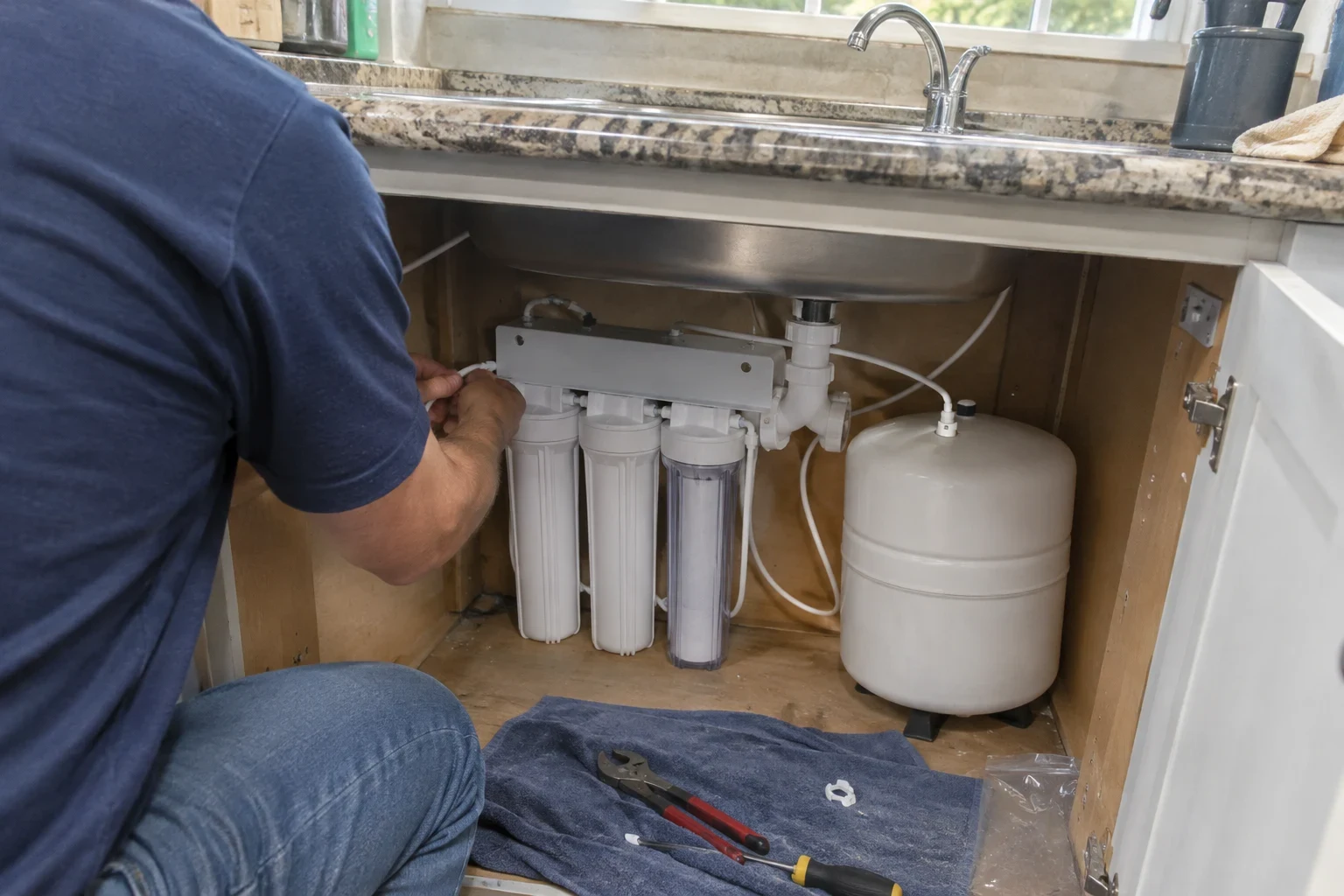
What Reverse Osmosis Does at Your Kitchen Sink
Reverse osmosis pushes water under pressure across a thin-film composite membrane. Water molecules pass through, while dissolved salts, many metals including lead, and a range of trace compounds are rejected and flushed to the drain. Ahead of the membrane, a sediment prefilter traps grit and a carbon block pulls out chlorine or chloramine, both of which degrade membrane material over time. A carbon polishing filter after the tank removes any taste the stored water picks up.
RO treats water at a single tap, almost always the kitchen, since that is where drinking and cooking happen. If you are bothered by the shower, the water heater or stains throughout the house, start with our Whole-Home Filtration or Water Softeners pages instead.
Code plays a bigger role in this install than most people expect. Florida's plumbing code is based on the national model code, which calls for RO units that meet NSF/ANSI 58 and for reject water to leave through an air gap, so drain water can never be drawn back into the system. Every install we do is planned around those two requirements.
What Our RO Installation Includes
Multi-stage unit to NSF/ANSI 58
We fit systems built to the NSF/ANSI 58 standard, with separate sediment, carbon and membrane stages. Because each stage is its own cartridge, you replace only the part that is worn instead of the whole assembly.
Air-gap faucet and drain saddle
The reject line routes through an air-gap faucet or a standalone air-gap fitting, then into a drain saddle clamped above the trap. Placing the saddle above the P-trap keeps sewer gas and backflow out of the system.
Cold-water feed valve
A quarter-turn feed valve on the cold supply lets you isolate the RO without shutting off the kitchen faucet. We never connect to the hot line, because heat breaks down the membrane.
Storage tank set to pressure
On tank systems we check the bladder tank's air precharge before it fills. Low precharge is the usual reason a brand-new tank gives only a weak stream.
Optional fridge and ice maker line
If you want it, we run tubing from the RO to the refrigerator so the ice maker and water dispenser draw treated water too. Cloudy ice with a stale taste typically goes away once that connection is made.
Signs an RO System Is the Right Call
You buy bottled water every week
When the faucet is only trusted for washing dishes, a dedicated RO tap generally ends the weekly cases of bottles and the hauling that goes with them.
Coffee and ice taste off
A chlorine bite or earthy note in coffee, tea or ice passes straight through an ordinary tap. The carbon and membrane stages take out most of what causes it.
Older plumbing in your home
Lead can leach from old solder and brass fittings inside the house even when the water arriving at the meter is clean. An RO unit built to NSF/ANSI 58 is one of the most direct ways to reduce it at the tap you drink from.
White crust on the kettle
Scale inside a kettle or coffee maker means dissolved minerals are in your water. RO takes most of them out of your drinking water, though it does nothing for the rest of the plumbing.
Your current RO has slowed down
A tank that runs dry after one pitcher, or a drain line that never stops running, usually means a fouled membrane, a failed shutoff valve or a tank that has lost its charge. Our Water Softener Repair & Maintenance and replacement pages cover aging equipment.
How the Install Day Runs
- 1
Talk it through by phone
We ask about your sink, countertop material, water source and whether you want a fridge line. That tells us which unit fits the cabinet and whether a booster pump is needed.
- 2
Check pressure and space
On arrival we measure incoming pressure, since a membrane needs roughly 40 psi to work efficiently. Well homes with a low cut-in setting on the pressure switch often need a booster pump.
- 3
Plumb and mount
We clear the cabinet, protect the floor, install the feed valve, mount the filter housing and tank, drill the faucet hole if needed and set the drain saddle with its air gap.
- 4
Flush and leak-check
New membranes and carbon release fines, so we flush the system and dump the first full tank. Then we check every push fitting dry with a paper towel before we pack up.
Cost Drivers for an Under-Sink RO System
Two things set the price: the unit you pick and the plumbing needed to fit it into your cabinet. We go over each option by phone so the number you hear matches the job you actually want. If the cabinet turns up a surprise, such as a corroded shutoff valve or a tailpiece too short for a drain saddle, we show it to you and get your okay before doing any added work.
- Tank or tankless design
- A tankless unit frees up cabinet room and fills a glass faster, but it needs an electrical outlet under the sink. A tank unit costs less and runs with no power at all.
- Countertop and faucet hole
- Reusing a sprayer or soap dispenser hole keeps the faucet mount simple. Quartz and granite need a diamond core bit and slower drilling, which adds time.
- Supply pressure
- Some private wells deliver low pressure, and a membrane starved of pressure wastes water and produces slowly. A booster pump or a permeate pump fixes that, at added cost.
- Extra lines and stages
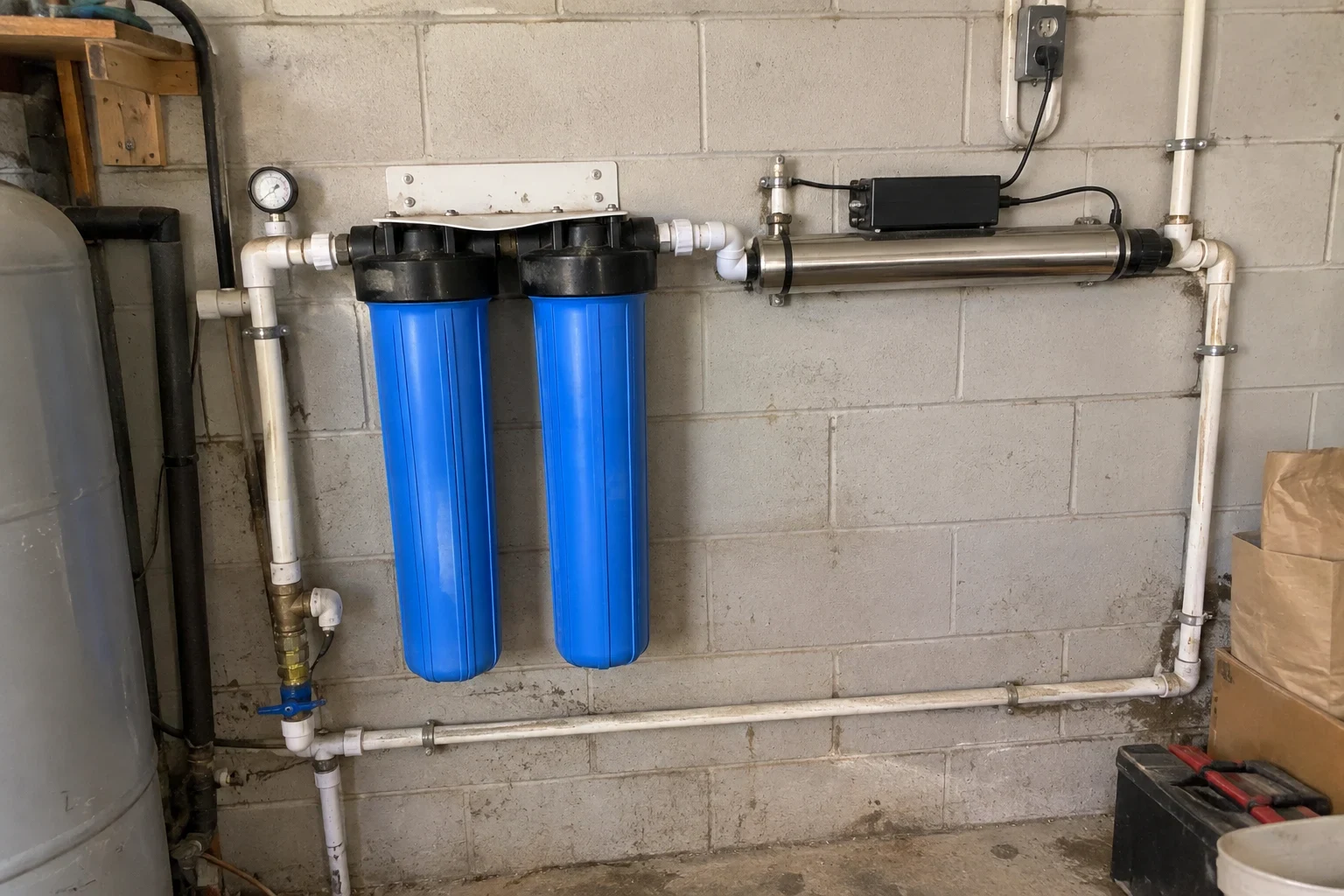
- Running a line to the refrigerator, adding a remineralization cartridge that puts calcium and magnesium back for taste, or fitting a UV stage on well water each add parts and labor.
Reverse Osmosis Questions We Hear
Something not covered here? (352) 280-3321
Does an under-sink RO install need a permit?
Adding an RO unit at an existing sink usually does not, because it connects to supply and drain lines that are already there. The code requirements still apply: a unit that meets NSF/ANSI 58 and a drain connection that discharges through an air gap. If your job calls for new drain work or a new line run, we tell you before we start whether the county expects a permit and take care of it.
How much water does RO send down the drain?
A typical membrane sends several gallons to the drain for each gallon of drinking water, and the ratio gets worse at low pressure. A permeate pump or a higher-efficiency membrane brings that number down noticeably. We can compare the options with you before you choose.
Will RO work with our well?
It will, provided the prefilters are matched to the water. Iron, sulfur and sediment foul a membrane fast, so many well homes run RO behind the equipment described on our Well Water Treatment page.
How often do the filters need changing?
Plan on replacing the sediment and carbon prefilters every six to twelve months, depending on how much water your household uses. A membrane commonly lasts two to four years when the carbon stage is changed on time, because chlorine that slips through to the membrane cuts its life short. When a cartridge is due, you can call us; our customers get ongoing support for maintenance, filter replacements and other service needs.
Does RO remove too many minerals?
It strips out most dissolved minerals, and some people taste that as flatness. Most people get their calcium and magnesium from food rather than water, but a remineralization cartridge can add some back if you prefer the taste.
Want RO Water Under Your Sink?
Tell us about your cabinet, your water source, city or well, and what bothers you about the water now. We will suggest a unit that fits and explain exactly how the drain and feed connections will be made.