ServicesWell Water Treatment
Well Water Treatment in Dade City
We design and install treatment for private wells that clears rotten-egg odor, orange iron stains and limestone scale. Each system is sized to your pump's flow rate and plumbed with a bypass and an air-gapped drain that meet plumbing code.
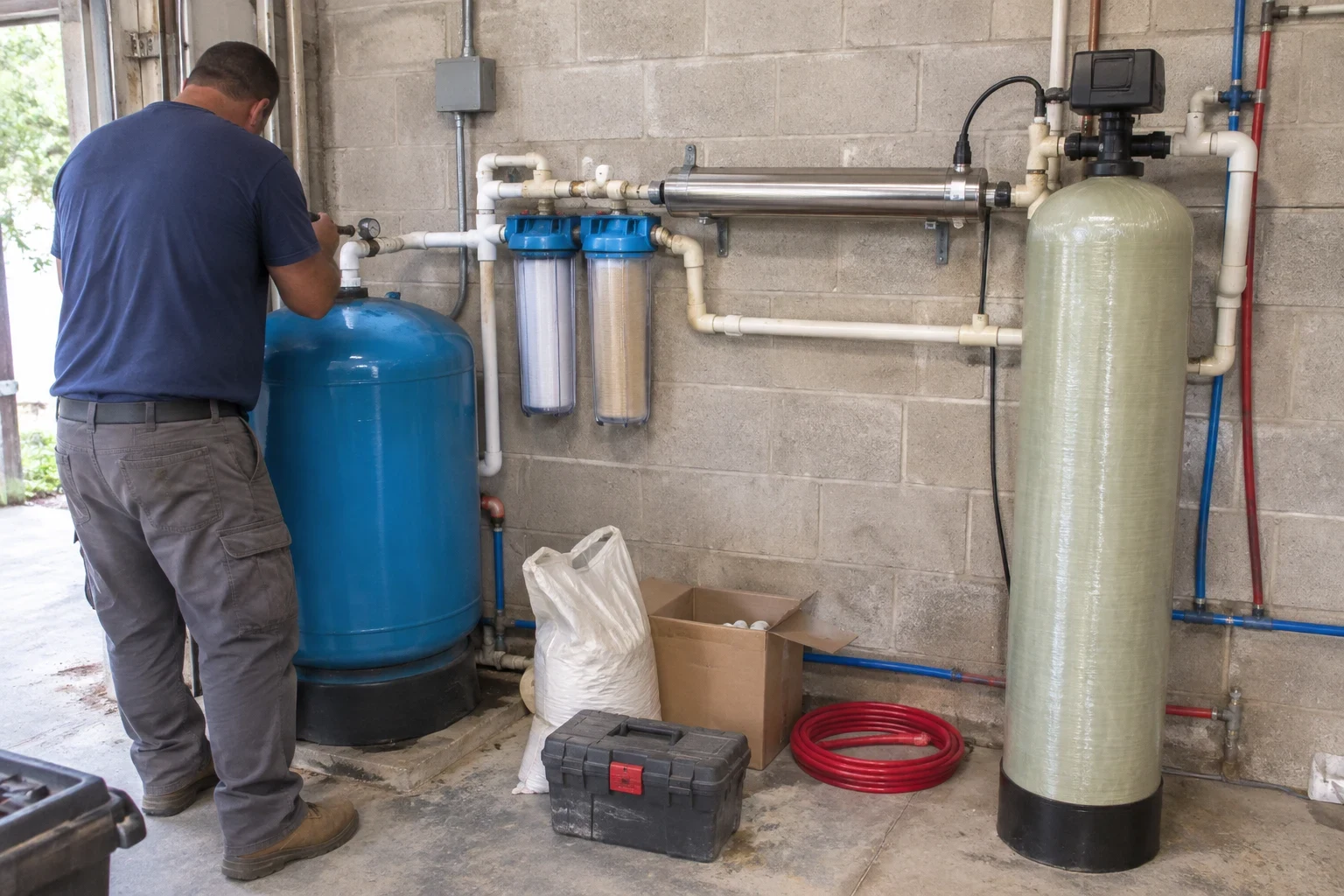
What Well Water Treatment Fixes
A private well delivers whatever the aquifer gives it. Around here that usually means water that has moved through limestone, so it picks up calcium and magnesium, and often dissolved iron and hydrogen sulfide gas. None of that is filtered out before it reaches your faucet, because there is no utility treatment plant between your well and your home.
Each problem needs a different fix. Hydrogen sulfide and dissolved iron have to be oxidized before a filter bed can catch them. Hardness is removed by ion exchange in a softener. Sediment is caught mechanically. We match the equipment to the problems your water actually has, so you are not paying for stages that do nothing.
The installation matters as much as the media inside the tank. Backwashing filters and softeners discharge water, and plumbing code requires that drain line to end at an air gap so wastewater can never siphon back into your supply. We build that in from the start.
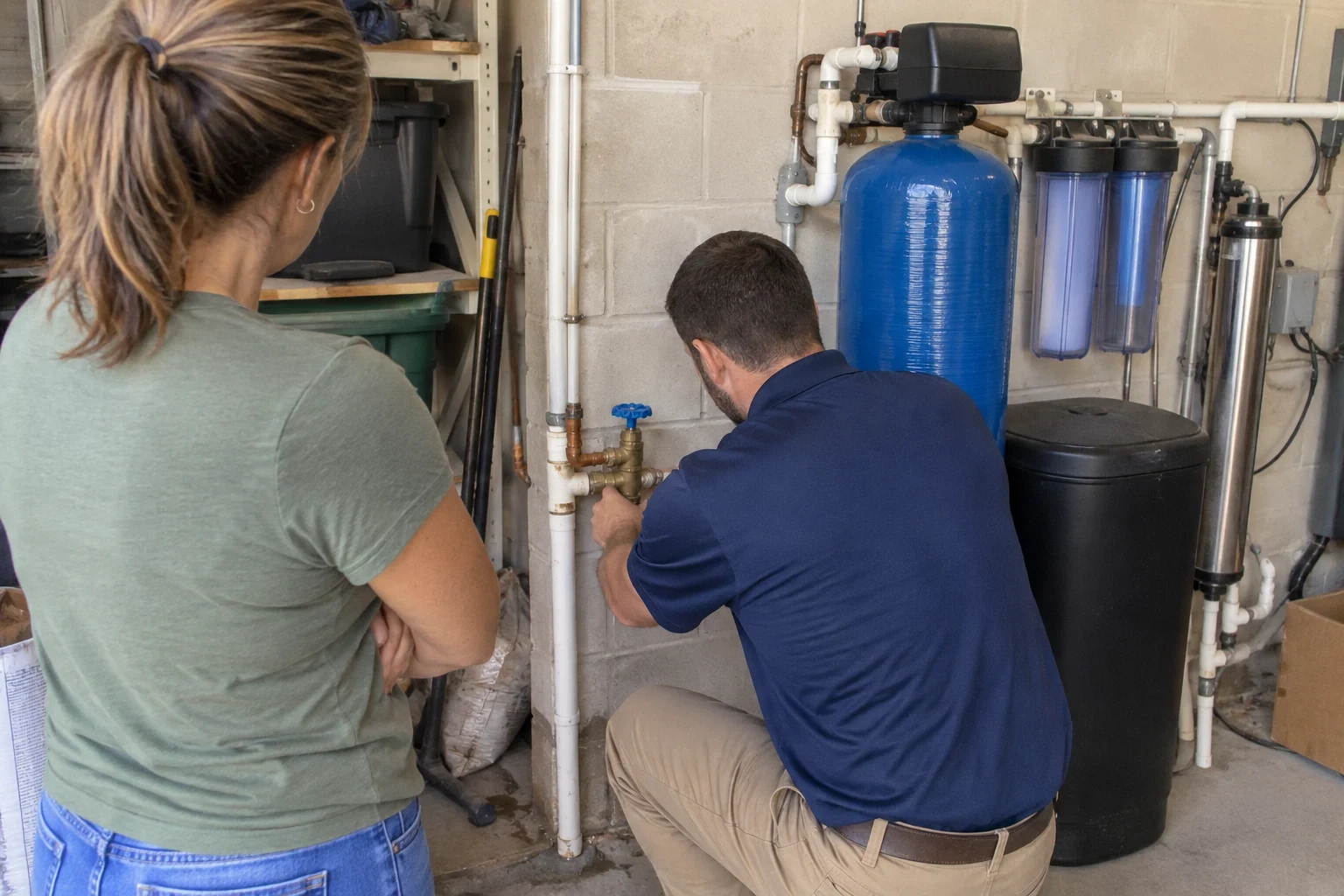
What the Work Includes
- 01
Sediment prefiltration
A spin-down or cartridge filter ahead of the main tanks catches sand and grit from the well. It protects the control valve seals and keeps the treatment media from clogging early.
- 02
Iron and sulfur removal
An air-injection oxidizing filter keeps an air head inside its tank. As water flows through that air, dissolved iron and hydrogen sulfide turn into solid particles, and the media bed holds them until the scheduled purge and backwash flushes them out.
- 03
Hardness control
Where scale is the issue, we add a softener after the iron filter. Putting it second keeps iron from fouling the resin.
- 04
Code-compliant plumbing
Every system gets a three-valve or integral bypass so you keep water during service. Drain lines end at a proper air gap, and we file with the county building department when the scope calls for it.
- 05
Startup and setup
We set backwash frequency and regeneration timing to your household's water use, then run the first cycle while we are there.
Questions about Well Water Treatment?
Call(352) 280-3321Signs Your Well Needs Treatment
Rotten-egg smell
That odor is hydrogen sulfide gas. If it shows up on both hot and cold taps, the gas is in the well water itself.
Orange or brown stains
Dissolved iron oxidizes when it hits air, leaving rust rings in toilets, sinks and on laundry. Irrigation can stain siding and walkways too.
White crust on fixtures
Scale on showerheads and faucet aerators means hard water. The same buildup forms inside your water heater, where it cuts efficiency.
Cloudy water or grit
Sand and silt in the lines point to sediment coming up with the pump. It wears out valves and clogs aerators.
Black slime in the toilet tank
Iron and sulfur bacteria feed on minerals in well water. The slime tells you treatment needs to deal with both the minerals and the bacteria.
How a Well Treatment Job Runs
- 1
Phone conversation
You tell us what you are seeing and smelling, and whether it is hot side, cold side or both. If you have a lab report on your well, have it handy, since exact iron and hardness numbers let us size media correctly.
- 2
On-site look at your setup
We check the pump's flow rate, pressure tank, where the main line enters your home and where a drain can go. Space and drain access often decide which equipment fits.
- 3
Written estimate
You get a line-item estimate listing each tank, the valves and whether a permit is part of the job. If the smell is only on the hot side, we will tell you it may be the water heater's anode rod, not the well.
- 4
Install day
We shut off the pump, cut in the bypass, set the tanks, plumb the air-gapped drain and sanitize the lines. Then we run a backwash, check for leaks and walk you through the controls.
- 5
Inspection and follow-up
When a permit was pulled, we schedule the inspection. Afterward, we stay available for maintenance, filter replacements and service needs.
What Moves the Price
Well treatment cost depends mostly on what is in your water and how much of it you use. A well with only sediment needs far less than one with iron, sulfur and hardness together. We price it after seeing your setup, and the estimate shows each piece.
- Number of problems
- Each contaminant can mean its own tank. Iron plus sulfur plus hardness usually takes two or three stages.
- Flow rate and household size
- The system has to keep up with your pump at peak demand. Undersized tanks let iron slip through and drop pressure.
- Location and drain access
- A garage with a nearby drain is simple. An outdoor pump house may need a pad, an enclosure or a longer drain run.
- Permit and existing equipment
- County fees and the time to remove an old, failed system add to the job. Our Water Softener & Filtration System Replacement page covers swap-outs.
Well Water Treatment Questions
Does installing a well treatment system need a permit?
It depends on the scope. Adding equipment to your main water line and running a new drain can require a plumbing permit. We check what applies to your job and handle it when needed, and it is listed on your estimate either way.
Will the backwash water hurt my septic system?
Backwash volume is modest, but it still goes somewhere. We look at your septic setup and drain options on the visit, and we set backwash frequency to what your water actually needs instead of running it more than necessary.
Will treatment lower my water pressure?
A correctly sized system causes very little pressure drop. Pressure problems usually come from tanks that are too small for the pump's flow rate, which is why we measure it before choosing equipment.
The smell is only on my hot water. Do I need a full system?
Maybe not. A magnesium anode rod in the water heater can react with sulfate and produce the same smell. Swapping the rod may solve it, and we will say so instead of selling you tanks.
How much maintenance does a well system need?
Air-injection filters mostly take care of themselves through scheduled backwashes. Sediment cartridges need periodic changes and softeners need salt. We offer ongoing support for maintenance, filter replacements and service needs.
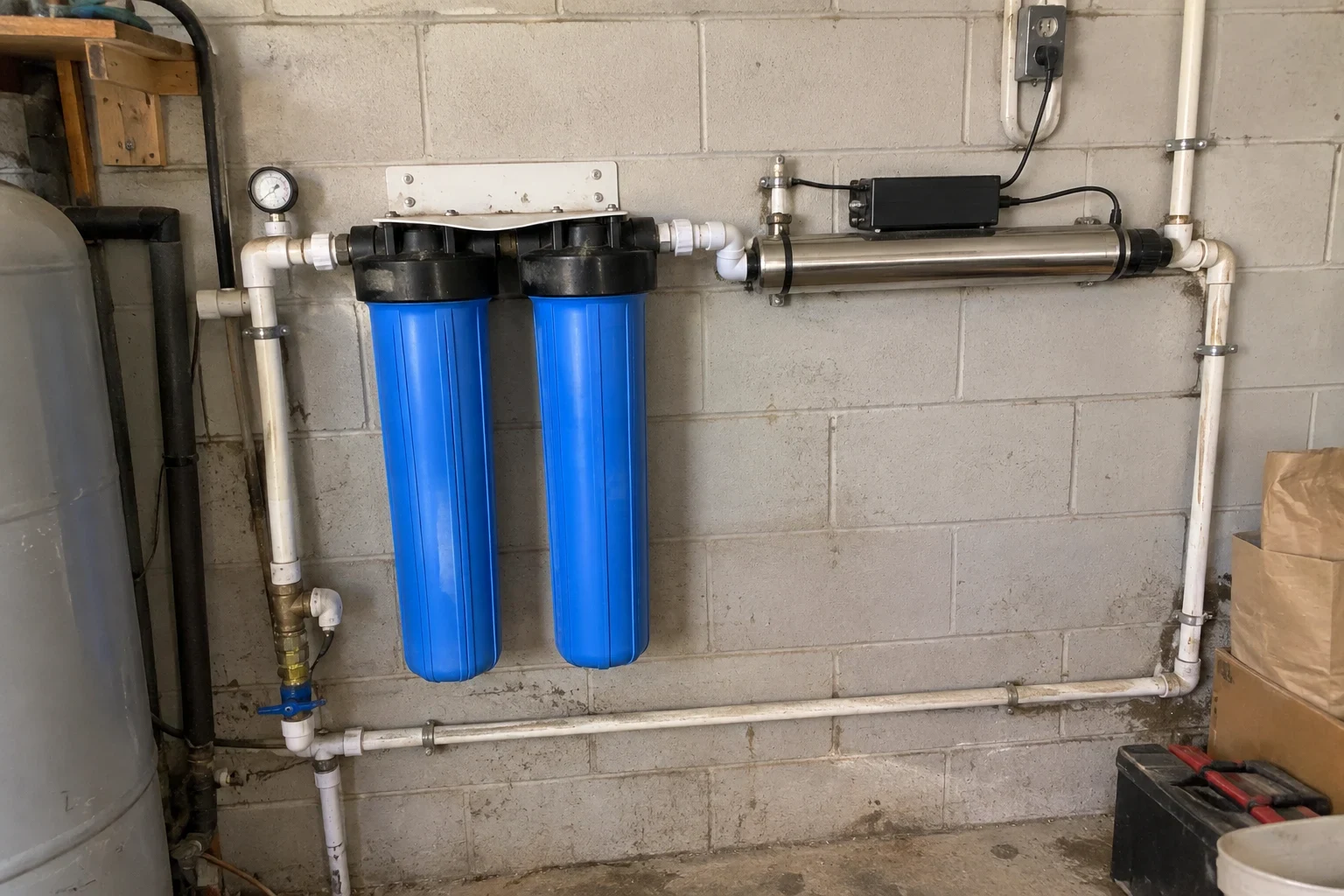
Get Your Well Water Sorted Out
Describe what you smell, see or taste at the faucet. We will walk you through the likely cause and what fixing it involves, including any inspection the work needs.