ServicesChlorine & Chloramine Removal
Dade City Chlorine & Chloramine Removal
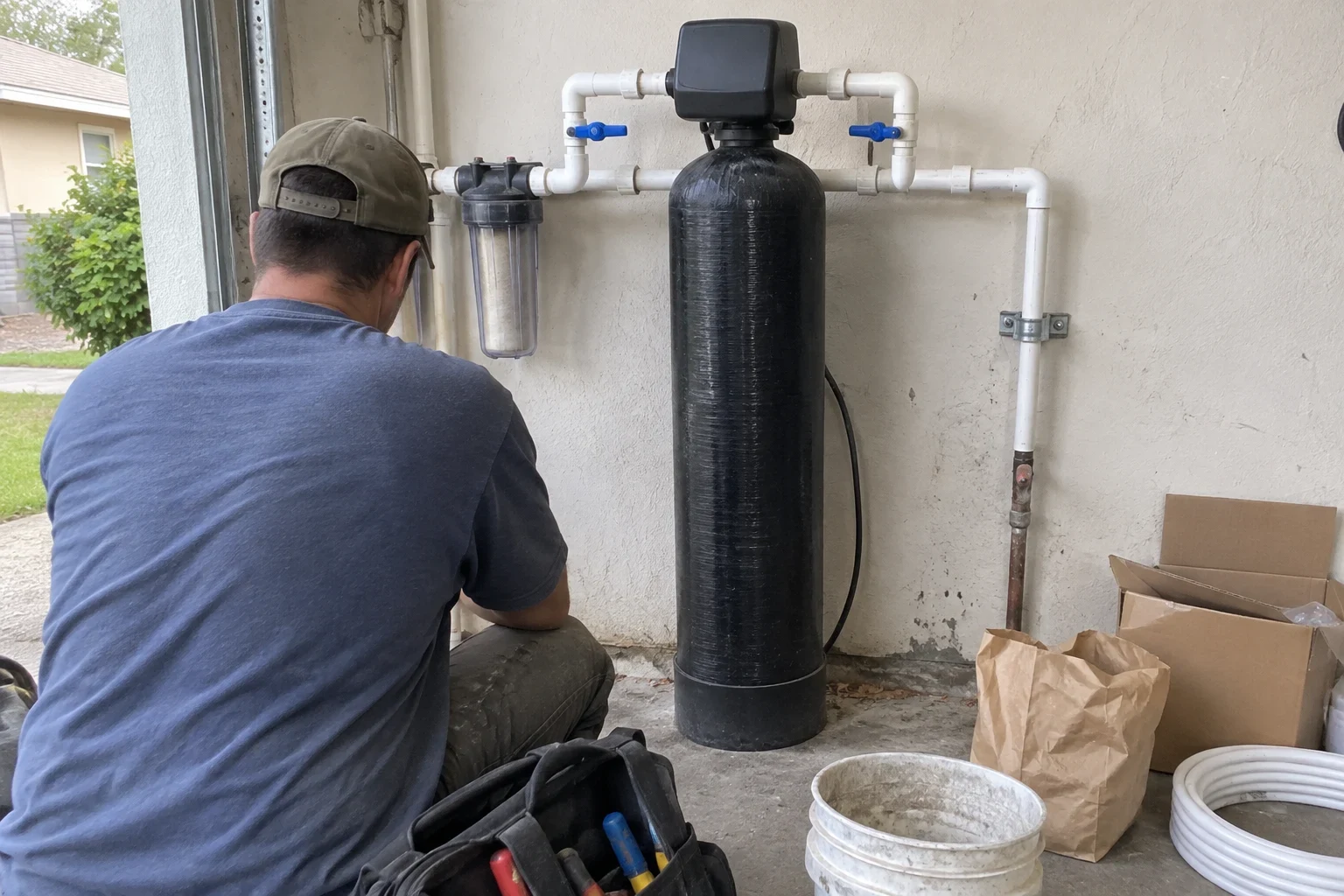
Our whole-home carbon systems remove chlorine or chloramine before the water gets to your showers and faucets. We size each one to your home's flow rate, plumb it with a code-compliant bypass and drain, and set it up so you know what it will need down the road.
What Carbon Treatment Does and Who It Suits
City water covers miles of mains before it reaches your tap, and a disinfectant keeps it safe on the way. Some utilities add plain chlorine. Others use chloramine, a mix of chlorine and ammonia that lasts longer in the pipes. Both do their job in the distribution system, but in your home they show up as a pool odor in the shower, a dull taste in coffee and tea, and wear on rubber parts.
Each one calls for its own media. Standard granular activated carbon takes chlorine out fast. Chloramine is more stable and needs catalytic carbon plus more contact time, which means a bigger tank or slower flow through it. The utility's annual water quality report names its disinfectant, and we size the system around that.
If better drinking water at one sink is all you want, a reverse osmosis unit may be the smaller project. If you want treated water at every shower, appliance and faucet, a whole-home carbon system is the better choice.
What the Installation Includes
- Media matched to your disinfectant
- Standard granular activated carbon when your utility uses plain chlorine, catalytic carbon when it uses chloramine. We tell you which one is going in and why.
- Tank sized by flow rate
- We count bathrooms and fixtures to estimate peak gallons per minute, then size the tank so water spends enough time in the carbon. An undersized tank lets chloramine slip through when two showers and the washer run at once.
- Sediment prefilter
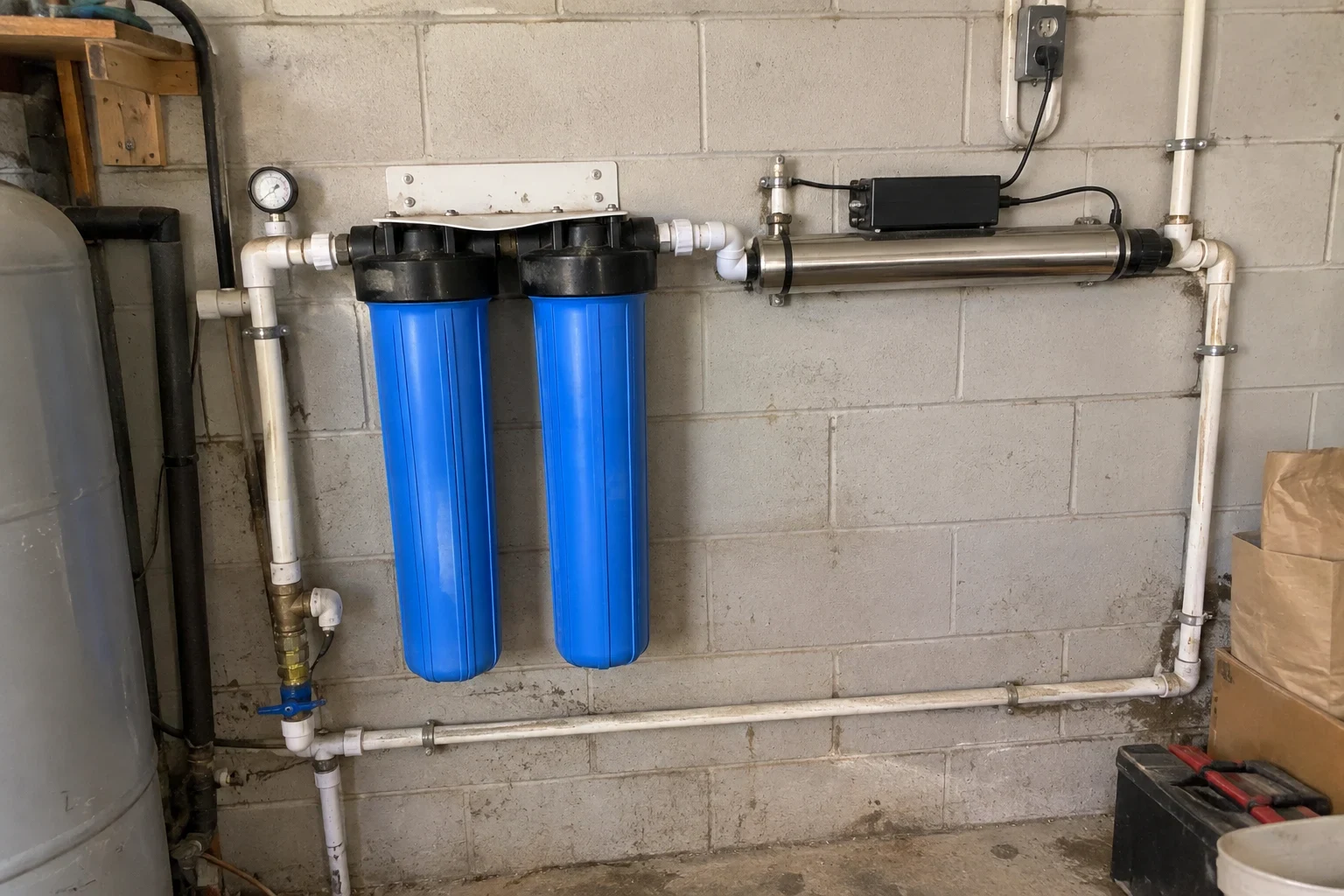
- A cartridge ahead of the carbon catches sand and pipe scale so the media bed does not clog and channel.
- Bypass valve and shutoffs
- A three-valve or integral bypass routes water past the tank when it needs work. Your faucets and toilets keep running while the cartridge or media is changed.
- Code-compliant drain and grounding
- Backwashing valves discharge through an air gap so drain water can never siphon back into the supply. Where the tank breaks a run of metal pipe, we add a jumper wire across it so the electrical ground stays continuous.
Signs Your Water Needs Chlorine or Chloramine Removal
A bleach smell in hot showers
Hot water releases chlorine as vapor, and a closed bathroom traps it. That steam is usually the first place people catch the smell.
Coffee and tea taste off
Chlorine reacts with the oils and compounds in brewed drinks and leaves a sharp, chemical note.
Dry skin and brittle hair
Shower water that still carries a disinfectant can leave skin feeling tight and hair rough after you towel off. Once carbon removes it at the main line, that dry feeling often eases.
Toilet flappers and washers wearing out
Chloramine is known to soften and crack some rubber compounds. If flappers, faucet washers or appliance seals fail early, the disinfectant may be part of the reason.
A pitcher filter that cannot keep up
Small carbon filters lose capacity fast against chloramine and only treat a few cups at a time.
How the Job Runs
- 1
Phone conversation
We ask about your utility, the number of bathrooms, where the main line enters and what you are noticing. From that we can outline the tank size and media type.
- 2
Site check and written scope
We look at the main line, the pipe material, the nearest drain and the outlet if the valve is electric. You get a written scope that lists the parts, the media and any permit the work requires.
- 3
Permit where required
When local rules call for a plumbing permit to cut into the main supply, we pull it and schedule the inspection, so the work is on record if you ever sell.
- 4
Installation day
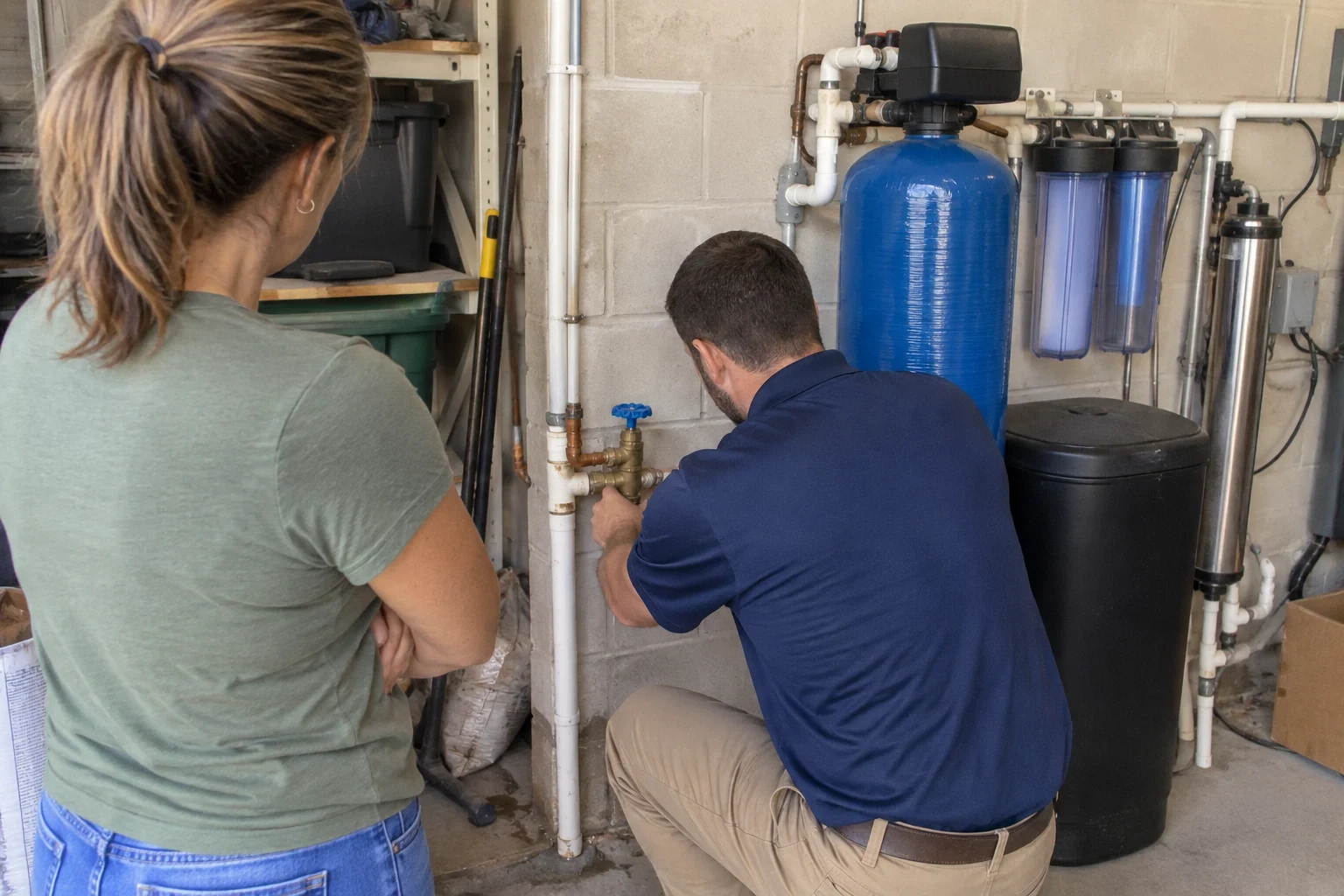
We shut off the main for part of the day, cut the bypass into the line, and set the tank and prefilter in place. Then we run the drain to an air gap, add the grounding jumper and flush the new carbon until no fines show in the water.
- 5
Walkthrough
We show you the bypass, the prefilter housing and the valve settings, and explain what replacing the cartridge and media will involve.
What Goes Into the Price
Your price comes down to how much carbon the house needs and how much plumbing it takes to put the tank in the right place. We give you a written scope before starting, so the number fits the setup you actually have.
- Which disinfectant you have
- Catalytic carbon costs more than standard carbon, and chloramine usually calls for a larger tank to give the water enough contact time.
- Size of the home
- Every extra bathroom pushes peak flow higher, which means more media and a bigger tank.
- Where the main line runs
- A main that comes up in the garage is simpler to tie into than one that has to be rerouted from an outside wall or from beneath a slab.
- Drain and power
- A backwashing valve needs a drain with an air gap and usually an outlet. Running either one to the tank adds labor.
- Permit and inspection visit
- When a permit applies, its fee and the inspection are listed as their own line in the scope.
Chlorine and Chloramine: Common Questions
Something not covered here? (352) 280-3321
How do I find out whether my utility uses chlorine or chloramine?
The utility's annual water quality report names the disinfectant, and a quick call to them will confirm it. That tells us which media goes in the tank. If you are on a private well with no chlorination, this system is not what you need; look at well water treatment first.
Will regular carbon remove chloramine?
Not well. Standard activated carbon breaks chloramine down slowly, so much of it passes through at everyday flow rates. Catalytic carbon has a treated surface that splits chloramine much faster, which is why we use it on chloramine-treated water.
Does a whole-home carbon tank reduce shower pressure?
Every media tank lowers pressure a little, and with the right size you likely won't feel it. A weak shower usually points to a tank too small for the home or a sediment cartridge full of grit that needs changing. We size the tank for your peak demand so the shower and dishwasher can run at once with good flow at both.
Could this replace a reverse osmosis system?
They do different jobs. Carbon takes the disinfectant and its taste out of the water for the whole house. An RO unit under the kitchen sink removes more dissolved solids from drinking and cooking water. Some homes use both.
What maintenance should I expect?
You change the sediment cartridge from time to time and replace the carbon bed once it is spent. How often depends on your water use and how much disinfectant your supply carries. Our ongoing support covers maintenance, filter replacements and service needs, so someone is a call away when it's due.
Get the Smell Out of Every Tap
Tell us your utility, the number of bathrooms and where your main line comes in. We will explain which carbon fits and what the installation involves.