ServicesWater Softeners
Water Softeners in Dade City
Hard water leaves calcium and magnesium scale in your water heater, fixtures and pipes. We size an ion-exchange softener to your hardness and your household's use. Then we plumb it with a bypass valve and an air-gapped drain, so it works and meets code.
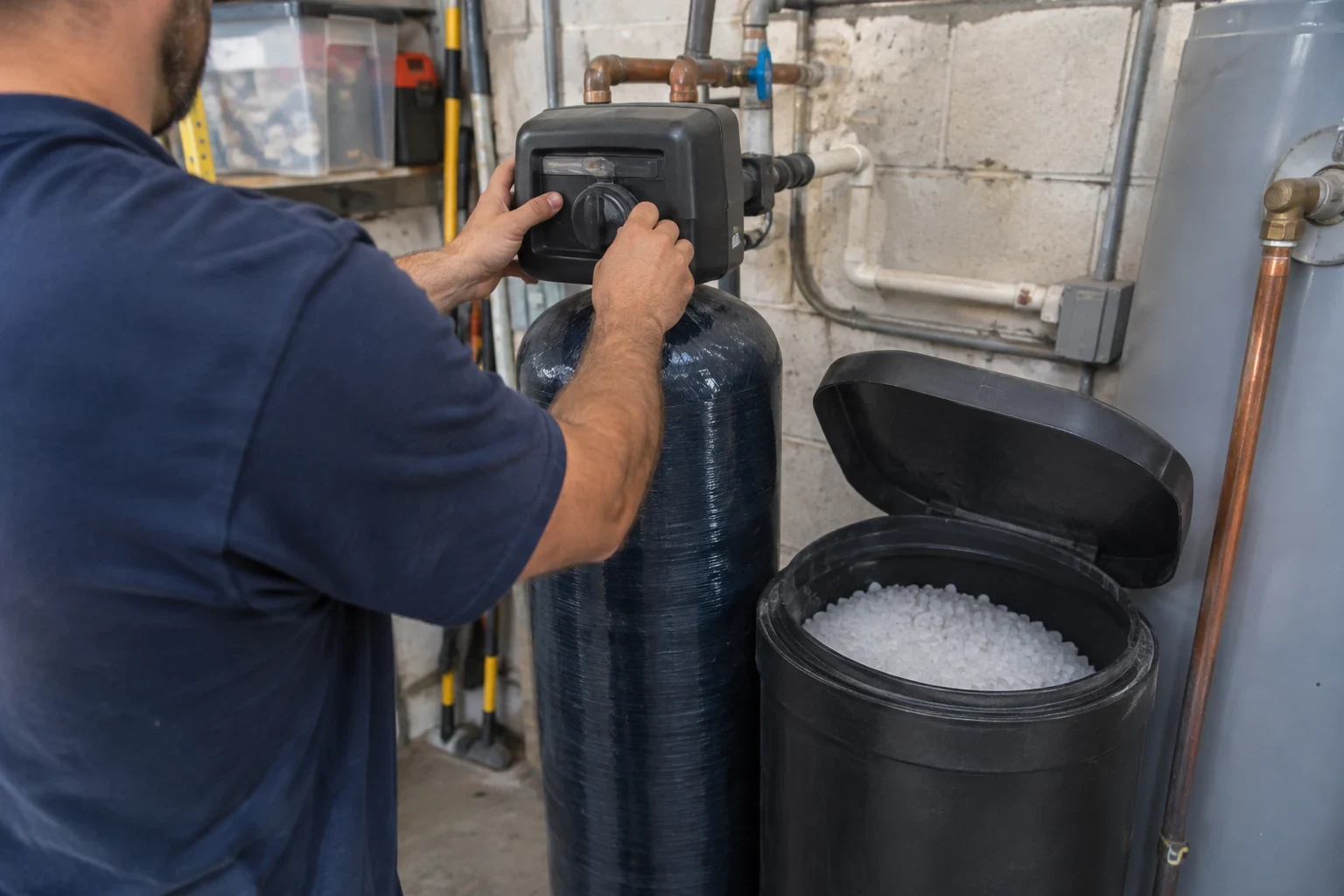
How a Softener Works and When It Makes Sense
A water softener is a pressure tank filled with resin beads. As hard water passes through, the beads trade sodium or potassium ions for calcium and magnesium, the minerals that form scale. When the resin is saturated, the control valve rinses it with brine from a second tank and sends the spent minerals down the drain. A metered valve runs that cycle based on the gallons you actually use, which saves salt and water compared with a simple timer.
Much of the groundwater in this part of Florida runs through limestone, so hard water is common on both city service and private wells. Still, a softener only fixes hardness. If your complaint is chlorine taste or odor, our Chlorine & Chloramine Removal or Whole-Home Filtration pages describe the better fit. We size from the hardness and iron figures in your utility's annual water quality report or results you already have, and we tell you plainly if a softener is not what your water needs.
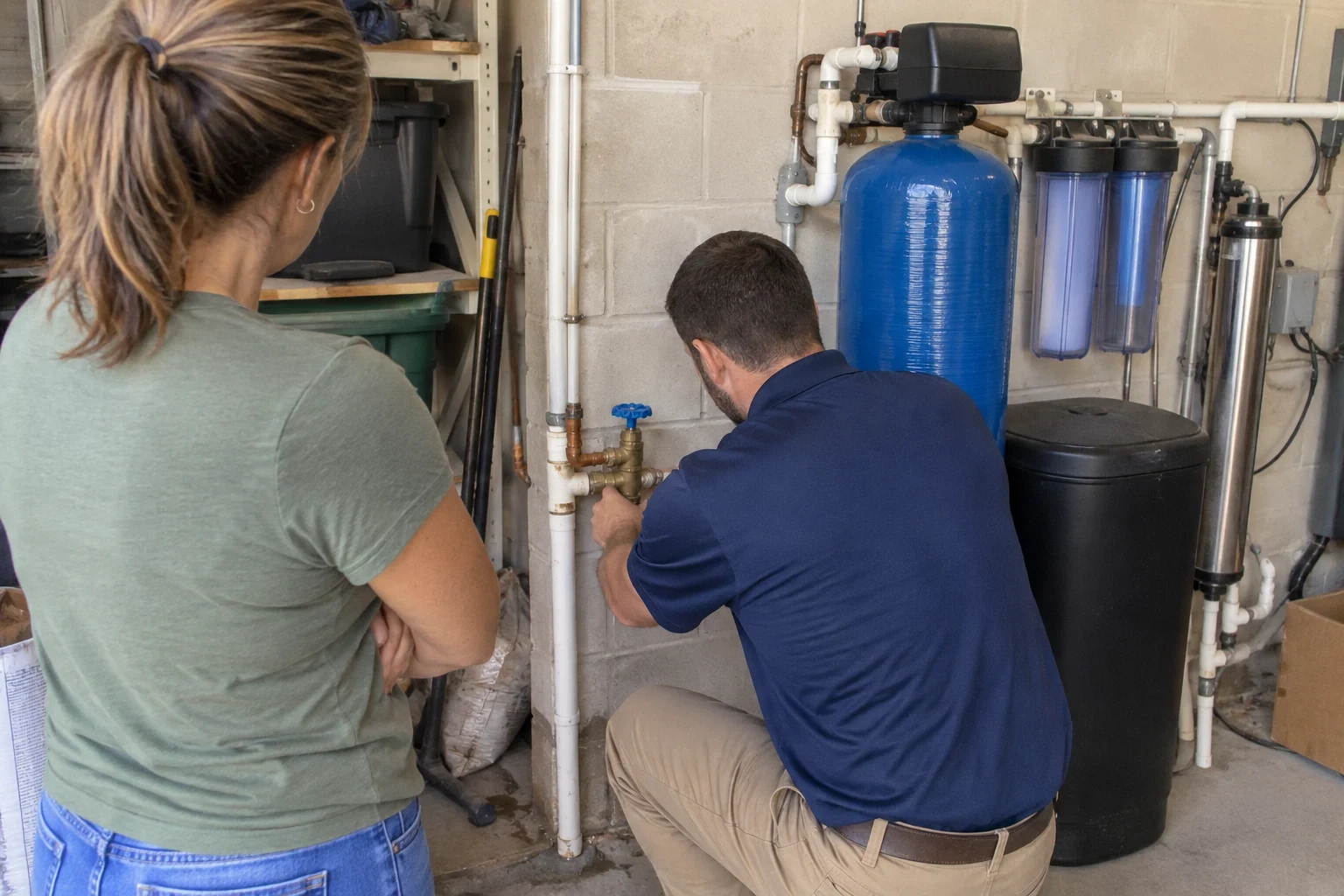
What Our Softener Installation Includes
- 01
Capacity sizing
Resin volume is matched to your hardness in grains per gallon and to how much water your household runs each day. Too little resin forces frequent regenerations that burn through salt. Too much leaves the bed idle long enough for water to cut channels through it instead of contacting every bead.
- 02
Bypass valve at the main line
Every system goes in with a bypass, so you can keep water flowing to the house during service without cutting pipe. On homes with metal piping, we add a bonding jumper across the softener so the electrical ground path stays continuous.
- 03
Backflow-safe drain line
The brine and rinse water from each regeneration empties into a drain through an open air gap, with no hard connection between the two. That open space means waste water can never be pulled back into your supply lines, and it's what the plumbing code calls for.
- 04
Permit and inspection
Where Dade City or Pasco County requires a plumbing permit for a softener connection, we pull it and book the inspection. The job gets closed out on paper as well as in the garage.
- 05
Startup and programming
We load salt, run the first regeneration and set the valve for your hardness, household size and salt type. Before we leave, we check every joint for leaks under full pressure.
Questions about Water Softeners?
Call(352) 280-3321Ways Hard Water Shows Itself Around the House
White residue on faucets
Each time water dries on a spout, shower head or drain rim, it leaves calcium carbonate behind as a dry, chalky crust.
Hazy glasses and shower doors
Spots that come back a day after cleaning are caused by dissolved minerals. Switching detergents or buying a new dishwasher won't stop them.
A noisy water heater
Rumbling or popping in a tank heater usually comes from scale sitting on the bottom. That layer keeps heat from the burner or element away from the water and lowers efficiency. Tankless heaters may show scale or flow error codes instead.
Soap that barely suds
Soap reacts with calcium and magnesium and leaves a film. It takes more shampoo and detergent to get clean, and clothes can feel stiff and look faded.
How a Softener Install Day Runs
- 1
Phone conversation
You describe what you're noticing, tell us if the house is on city water or a private well, and where the main line comes in. We ask for any hardness figures you have.
- 2
Site look and quote
We check the main line, the nearest drain, the outlet for the control valve and the floor where the tanks will sit. You get your quote by phone with the equipment and the plumbing work spelled out line by line.
- 3
Installation
We shut off your water, cut in the bypass loop and set the resin and brine tanks. Then we run the drain line with its air gap and connect the valve to a dedicated outlet, not an extension cord. Most installs keep your water off for a few hours, not the whole day.
- 4
Startup and walkthrough
We regenerate the system, check for leaks and show you how to use the bypass and add salt. If your address calls for an inspection, we schedule it and meet the inspector.
What Affects the Price of a Softener
Softener installs vary in price because water chemistry and plumbing layouts differ from one house to the next. Two things move the number most: how large the resin tank has to be, and how far the equipment sits from your main line and a usable drain. Your quote walks through each item before any work begins.
- Hardness and household size
- Harder water and more people mean more grains removed per day, which calls for more resin and a larger tank.
- Control valve type
- A valve with a built-in water meter has a higher purchase price than a clock-timer valve. It earns some of that back by regenerating only after a set number of gallons, so it draws less salt and rinse water year to year.
- Plumbing location and access
- A main line that enters in the garage near a drain is simpler. Exterior loops, long drain runs or tight utility closets add pipe and labor.
- Pre-treatment needs
- Well water with high iron or sediment may need a filter ahead of the softener to protect the resin. Our Well Water Treatment page explains those setups.
- Local code requirements
- If your address needs a plumbing permit, its fee and the inspection visit are part of the job.
Softener Questions Homeowners Ask
Is a permit required to install a softener?
That comes down to your jurisdiction and how much plumbing the job changes. Connecting to the main line and adding a drain discharge may be covered by plumbing rules. We check what your address requires and pull the permit when one is needed, so the work is set up to pass inspection.
Does softened water taste like salt?
At normal hardness levels, the softener adds very little sodium, and most people can't detect it. Potassium chloride is an option in most units if you want to skip sodium. A lot of homeowners also put a Reverse Osmosis system at the kitchen sink for the water they drink and cook with.
Is it okay for a softener to drain into my septic system?
We hear this a lot, since many homes near Dade City are on septic. A metered softener sized correctly only regenerates when it has to, which limits how much brine goes out. We run the drain line to a suitable discharge point and go over the choices for your home.
How often does the salt need refilling?
Your hardness, your household's water use and the size of the brine tank all set how fast salt goes. Check under the lid once a month and top it up when the salt drops below the water line. We set the valve to regenerate based on measured gallons instead of a fixed schedule, so slow days don't use up salt.
Does a softener get rid of chlorine taste or odor?
No. The resin pulls out calcium, magnesium and small amounts of dissolved iron, but chlorine, chloramine and odors go right through it. Activated carbon removes those, and we can install a carbon stage next to your softener. See our Chlorine & Chloramine Removal page for the options.
What support do I get once it's installed?
Our ongoing customer support covers maintenance, filter replacements and service needs. When the valve or resin needs work down the road, our Water Softener Repair & Maintenance page explains what we do.
Size a Softener to Your Water
Let us know what you notice at your faucets and how your plumbing is laid out. We'll go over sizing, where the drain will run and any code steps before anything goes on the calendar.