ServicesSoftener Repair & Maintenance
Water Softener Repair & Maintenance in Dade City
When hard water comes back, the softener has usually stopped regenerating, stopped drawing brine or lost resin capacity. We find which one, repair the part that failed and leave the drain and bypass plumbing correct, so the unit keeps working instead of failing again next month.
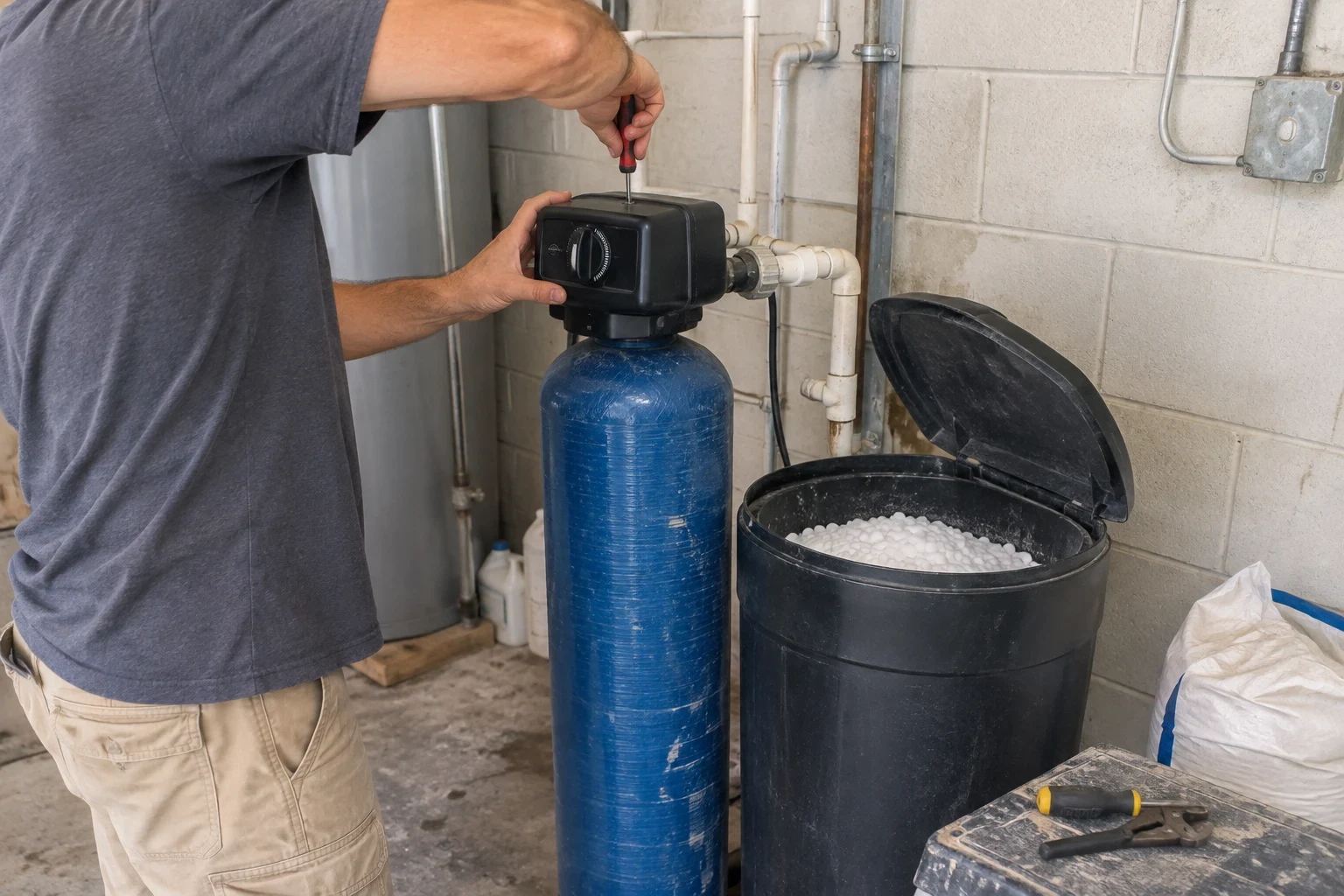
What softener repair actually fixes
A softener works in two halves. The resin tank swaps calcium and magnesium for sodium as water passes through, and the brine side recharges that resin during regeneration. Nearly every failure falls into one of three places: the control valve that runs the cycle, the brine system that feeds salt solution to the resin, or the resin itself once it is worn or coated with iron.
Repair is the right call when the tank and resin are sound and one component has failed, such as a worn piston seal, a clogged injector or a dead circuit board. If the resin is broken down and the valve is obsolete at the same time, we will say so and point you to our water softener and filtration system replacement page rather than stacking repairs on a unit near the end of its life.
Many homes around Dade City draw hard, iron-bearing water from private wells, and that iron is the most common reason resin loses capacity early. Scheduled maintenance catches it before the softener stops working.
What a service or repair visit includes
- Diagnosing the control valve
- We move the valve by hand through backwash, brine draw, rinse and refill to find the stage that fails. Worn pistons, spacer stacks and seals let water run to drain or let hard water slip past the resin.
- Injector cleaning and brine draw
- The injector is a small venturi that draws brine out of the salt tank. Sediment and iron plug it easily, so we remove it, clean the nozzle and throat and fit a new screen.
- Salt tank service
- We break apart salt bridges and clear out mushy salt at the bottom of the tank. Then we check the float and brine line so the tank refills to the correct level.
- Cleaning or replacing resin
- Resin fouled with iron can often be brought back by running a resin cleaner through a regeneration. If the beads are cracked or have broken into fines, we replace the bed and the distributor screens.
- Settings and water meter check
- We set hardness, regeneration time and salt dose to fit how your household uses water. On metered valves we make sure the turbine turns, since a stuck meter means the unit never starts a regeneration.
- Checking the drain and bypass
- We make sure the drain line ends at a proper air gap and the bypass valve closes completely. Both matter for plumbing code and for keeping drain water out of your supply.
When your softener is due for service
Spots and scale have returned
A white film on glass shower doors or crust on faucet aerators tells you hard water is slipping past the resin. Usually the unit skipped a regeneration or the resin has run out of capacity.
The salt never goes down
Salt that sits at the same height for weeks means the valve is not pulling brine. A plugged injector or a hard salt bridge is the most likely cause.
Brine tank filled close to the lid
Many brine tanks are designed to keep some water under the salt between cycles. When the level rises near the top, the float has likely failed, the brine line is blocked or the valve keeps refilling past its set time.
Water running to the drain nonstop
If you hear flow to the drain at odd hours, worn seals in the control valve are a common reason. It wastes water and can let unsoftened water into your home.
Weak pressure or rust-colored water
A resin bed clogged with iron and sediment chokes the flow through the tank. Orange stains at fixtures, on a softener that should be catching light iron, point to the same fouled bed.
How the service visit runs
- 1
Talk it through by phone
You tell us the brand, rough age and what you are noticing. That helps us bring the right seals, injectors and common valve parts on the first trip.
- 2
Diagnose before replacing anything
We put the unit in bypass, cycle the valve and watch each stage. You see what we find and hear why it failed before any part is changed.
- 3
Repair and reset
We replace the failed component, clean the brine side and program the valve for your household. If a change to the drain or supply plumbing is needed, we tell you whether it calls for a permit before we start.
- 4
Run a full regeneration
We watch a complete cycle to confirm brine draw, rinse and refill all work. Then we return the bypass to service and clean up the work area.
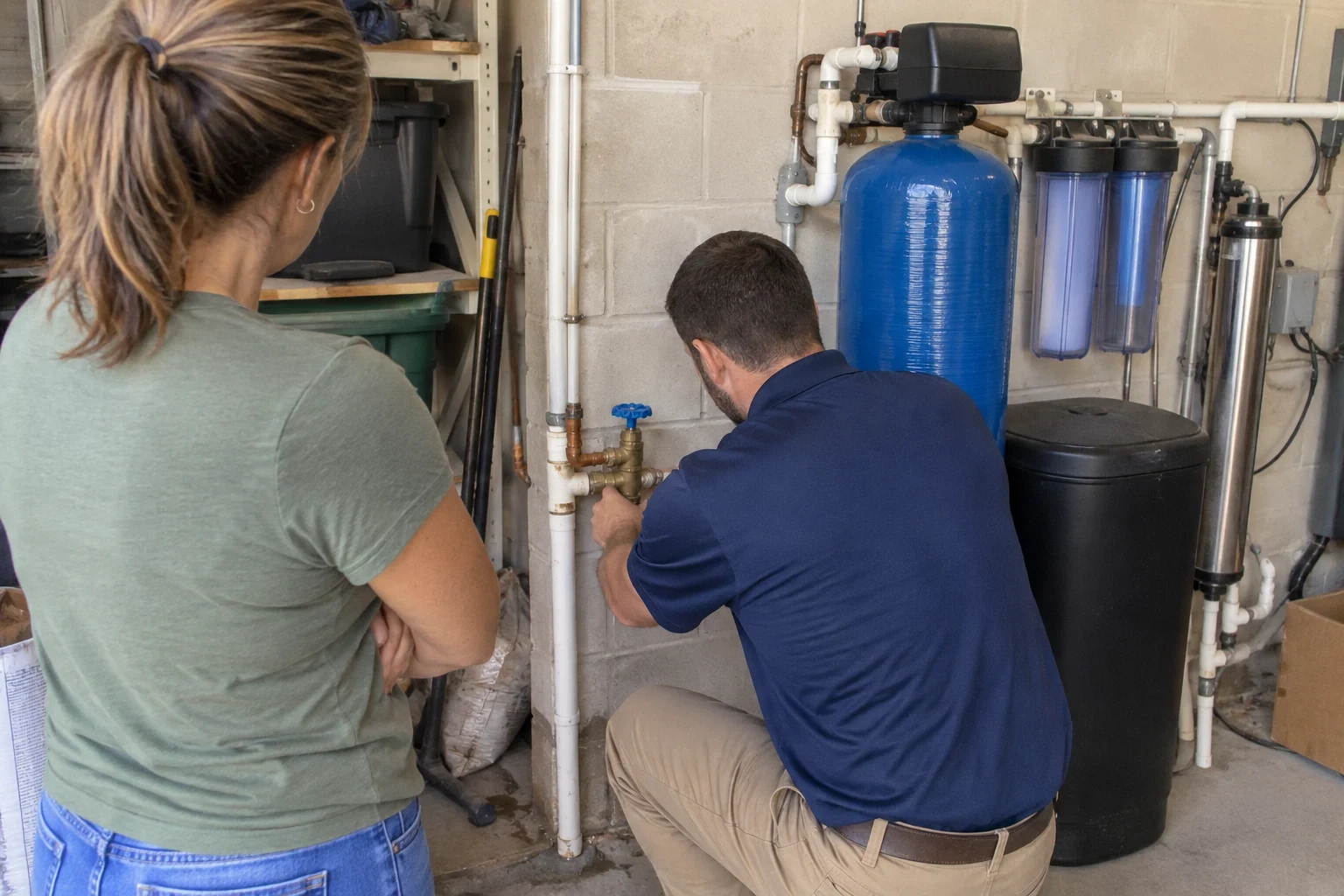
What moves the cost of softener repair
Most of the price comes from which part failed and whether replacement parts are still made for your valve. A cleaning and adjustment costs far less than a resin bed or a new valve head. We explain the options in plain terms before any work starts, so you decide with the full picture.
- Valve brand and age
- Common valve heads use parts that are easy to source. Older or proprietary valves may need a rebuild kit or a full valve swap if parts are discontinued.
- Resin condition
- Cleaning iron out of resin is a modest job. Replacing the bed means draining the tank, removing the old media and refilling with new resin and gravel underbed.
- Iron and sediment load
- Well water with heavy iron clogs injectors and fouls resin faster. That can mean more cleaning now and a shorter maintenance interval going forward.
- Plumbing corrections
- A missing air gap, a leaking bypass or a drain line routed incorrectly adds time and materials. We fix these so the system meets code, not only so it softens again.
Questions about softener repair
Something not covered here? (352) 280-3321
How often does a softener need service?
Most homes on city water do well with a yearly visit. Well homes with iron often need service every six months, because iron collects on the resin and in the injector. Between visits, keep the salt above the water line and break up any crust that forms.
Should I repair an older softener?
Usually, if the tank is in good shape and parts are still available. A new piston and seal kit or a cleaned injector can keep a unit running for years. If the resin is worn out and the valve is discontinued, replacing it is usually the better choice, and we will say so plainly.
Is a permit needed for softener repairs?
Replacing parts inside the valve or brine tank usually does not need one. Work that alters the supply piping, adds a drain connection or moves the unit can fall under plumbing rules. We tell you which case applies before starting and take care of any required steps.
Why is my brine tank holding so much water?
Usually the float, the brine line or the refill control in the valve is not shutting off. In other cases a plugged injector keeps the tank from draining during brine draw. Either one is a routine fix once we pin down the cause.
Which salt should I buy?
Clean evaporated or solar pellets form fewer bridges and less mush than rock salt, which brings insoluble grit into the tank. On well water with iron, salt that includes an iron-removal additive can help keep the resin cleaner between visits.
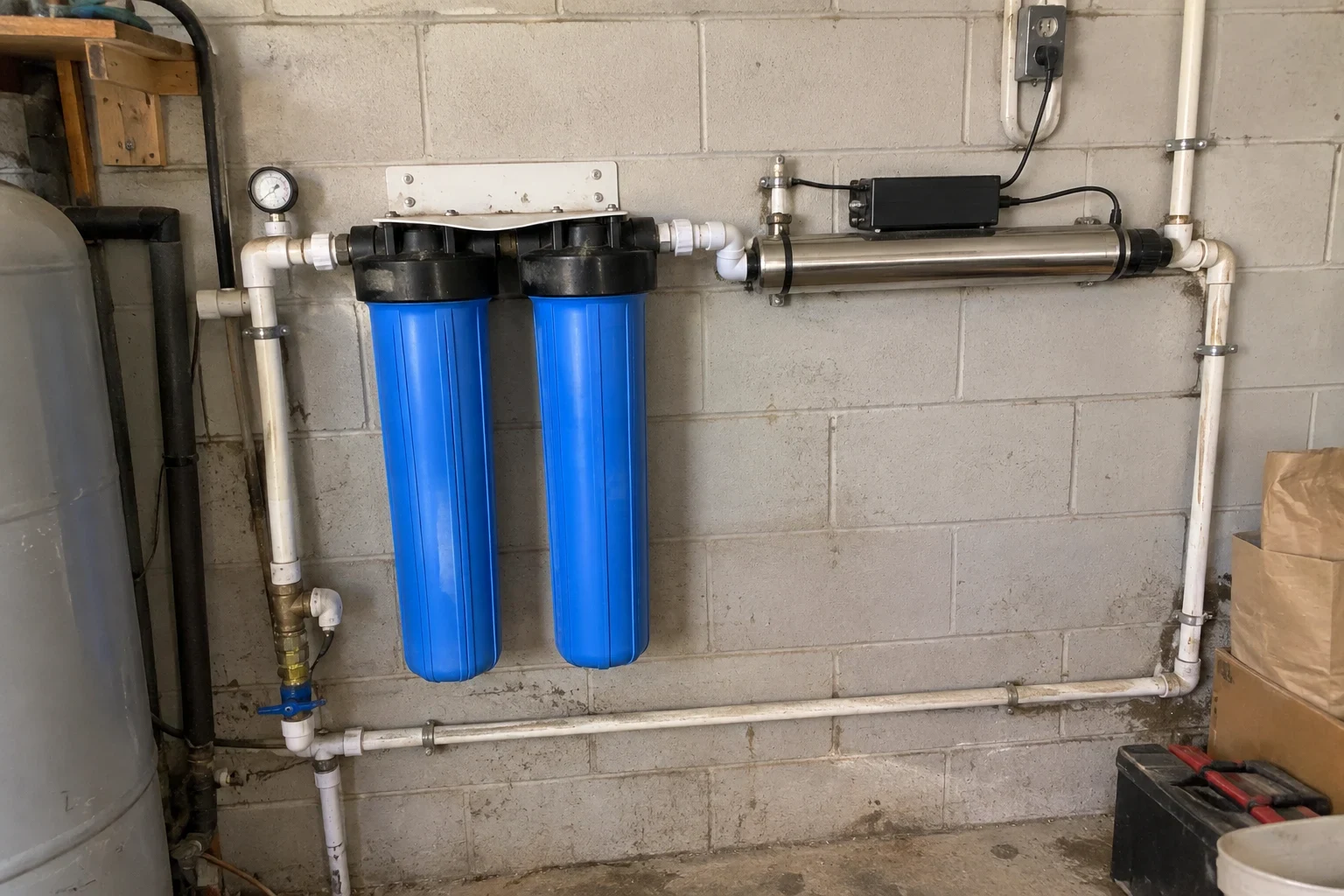
Put your softener back to work
Describe what the unit is doing and we will plan the visit around it. Once the repair is done, our ongoing customer support covers maintenance, filter replacements and service needs.