ServicesSystem Replacement
Dade City Water Softener & Filtration System Replacement
When your softener or filter system no longer does its job, we take it out, size new equipment to your household's water use and plumbing, and put it in with a bypass valve, a drain connection that meets code and any permit the job requires.
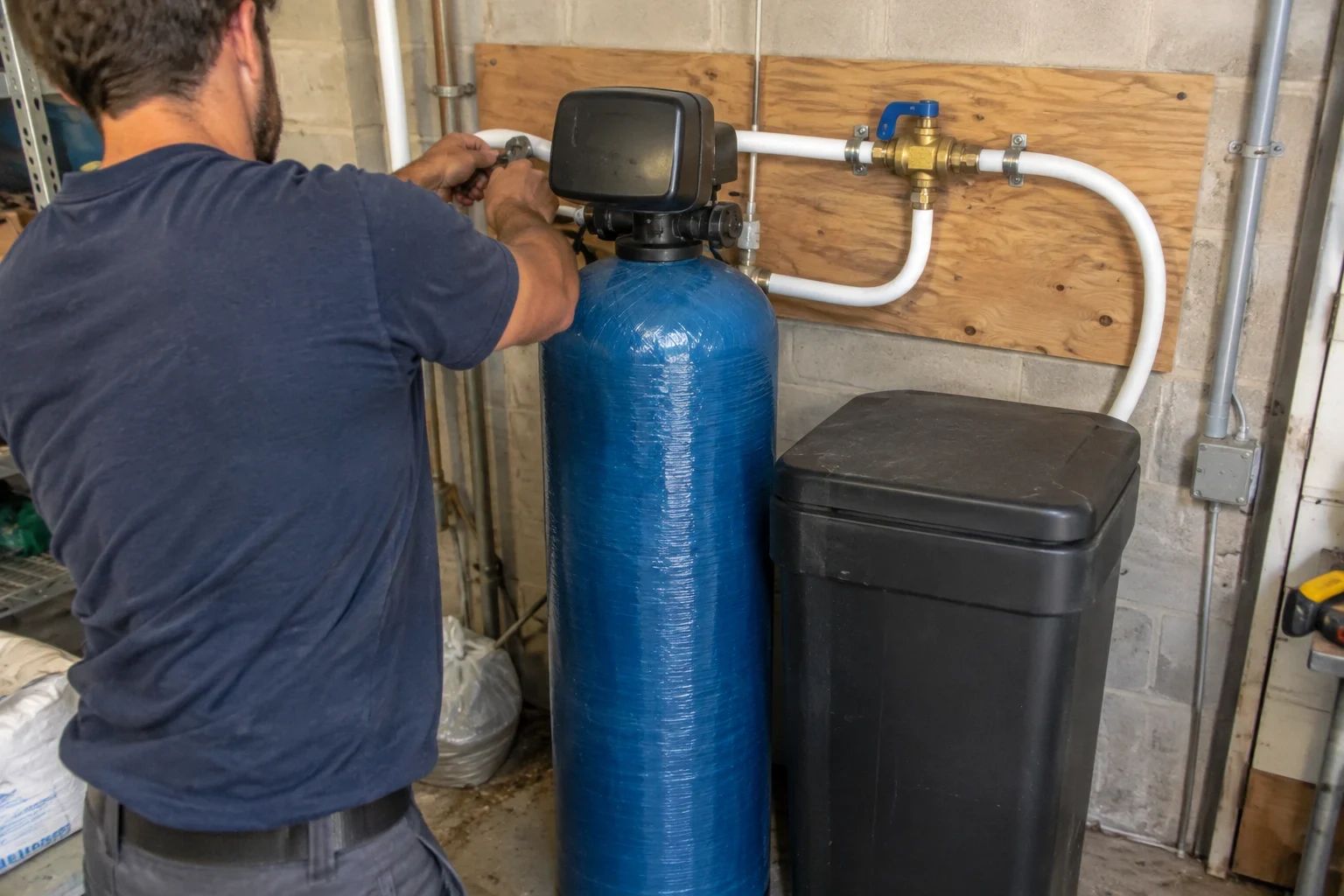
Repair or replace: where the line falls
Softeners and filter systems tend to fail in the same few spots. Iron fouls softener resin and chlorine breaks it down. The carbon in a filter tank gets used up. Control valves wear out their seals and pistons, and fiberglass tanks can split near the bottom. One bad part calls for a repair, which our Water Softener Repair & Maintenance page covers. When the tank, media and valve are all wearing out together, new equipment is usually the better use of your money.
We tell you honestly where your equipment stands. If replacement is our recommendation, we explain it by naming the parts that have worn out, not just by calling the unit old.
A replacement is also a chance to fix mistakes in the original install. Many of the units we pull out have a drain hose stuffed into a standpipe without an air gap, no bypass valve, or cut metal water pipe without a bonding jumper. We fix those as part of the work.
What the replacement covers
Removal and haul-away
We drain and disconnect the old tanks, valve and brine tank and take them with us. You do not have to arrange disposal.
Sizing the new system
We size a softener by grain capacity and a filter by flow rate, using your household size, bathroom count and plumbing line size. An undersized softener has to regenerate far more often, which wastes salt and water with every extra cycle. An oversized unit moves so little water through the resin bed that the flow cuts narrow channels past most of the media, and the tank stays stagnant between uses.
Bypass valve and connections
Every system goes in with a bypass valve, so water can keep flowing to your home during service. We match the connections to your existing PEX, CPVC or copper and use dielectric fittings where copper meets dissimilar metal.
Code-correct drain and overflow
The regeneration drain line ends at a proper air gap above the drain, which keeps wastewater from siphoning back into the system. The brine tank overflow is routed separately to a drain, not left to spill onto the garage floor.
Bonding and power
If we interrupt metal water pipe, we install a bonding jumper to keep the electrical ground continuous. The control valve gets a plug-in transformer on a nearby outlet, and we do not run extension cords.
Startup and walkthrough
We load the media, set the control valve for your household's hardness and water use, run a regeneration cycle and check for leaks. Then we show you the bypass, the salt level and when filters come due.
Signs your system is due for replacement
Hard water is back after repairs
Spotting on glassware and scale on fixtures return even though the valve has been serviced. That usually points to resin that has lost its exchange capacity.
Resin beads in faucets or aerators
Small amber beads in the faucets or aerators mean a cracked distributor tube or underdrain inside the tank. On older units, replacing the whole tank is often the sensible fix.
A cracked or sweating tank
Water around the base of a mineral tank, or a visible seam split, will not hold up under line pressure. That tank needs to come out.
Parts are no longer made
Some older timer-style control valves can no longer be serviced because seals and pistons have been discontinued. A modern metered valve regenerates based on actual water use, which also cuts salt and water consumption.
Chlorine taste or odor returns
In a carbon filter system, a returning chlorine smell means the media is spent. On a tank well past its service life, swapping media alone may not be worth it.
What happens on replacement day
- 1
A call to start
You describe your current equipment, where it is and what it is doing wrong. We ask how many people live in the home, where your water comes from and what repairs have been done, so we show up with the right equipment in mind.
- 2
Site visit and written scope
We check the old unit, the plumbing, where the drain is and the closest outlet. Then we put in writing what gets replaced and what gets corrected.
- 3
Permit and inspection with the county
When the work changes your plumbing in a way the county oversees, like moving the system or rerouting lines, we pull the permit and book the inspection. We let you know at the start whether your job is one of those.
- 4
Install
Your water is off only while we tie in the new connections, usually a few hours. We lay drop cloths before unpacking tools, and we take the cut pipe, old fittings and packaging with us when we finish.
- 5
Startup and ongoing help
Once the first regeneration runs and the leak check passes, we hand the system over. Our ongoing customer support takes care of maintenance, filter replacements and future service needs.
What sets the cost of a replacement
Replacement prices differ from job to job because both the equipment and the site change. We quote after we see your setup and walk you through every line, so the cost is clear before any work begins.
- Equipment type and capacity
- A softener alone is priced differently from a softener with a carbon filter, and higher grain capacity or flow ratings add to the equipment cost.
- State of your plumbing
- Corroded copper, a line that is too small or no shutoff valve means extra work where we connect. We show you what we found before we fix it.
- Placement and drain access
- An open garage spot close to a drain is easier than a closet or an outdoor enclosure. A long drain line or a new outlet takes more time.
- Permit fees and inspection
- If the county calls for a permit, the fee and the inspection visit are included. They appear in the written scope up front, not added afterward.
Replacement questions we hear
Something not covered here? (352) 280-3321
Can I just replace the resin instead of the whole softener?
Sometimes, yes. If the tank is sound and the control valve is still supported with parts, rebedding the resin can be the right call. If the tank is cracked or the valve is obsolete, new resin in old hardware is money spent on parts that will fail soon. We tell you which applies.
Does a softener replacement need a permit?
A like-for-like swap in the same spot often does not. Relocating the system, adding new water lines or changing the drain may require one. We confirm what your job needs and take care of the paperwork and inspection when the county calls for them.
Why does the drain line need an air gap?
The plumbing code requires a physical gap between the drain hose and the drain it empties into. Without it, wastewater can be drawn back into the softener when pressure drops. It is a small detail, but many older installs skip it.
Will I lose water while you work?
Only briefly. Water is off while we cut in the new connections, then the bypass valve lets water flow to your home while we load media and start the system.
Can you replace a softener and add filtration at the same time?
Yes. If chlorine taste or odor is part of the problem, we can install a carbon tank alongside the new softener. Our Chlorine & Chloramine Removal and Whole-Home Filtration pages explain those systems in more detail.
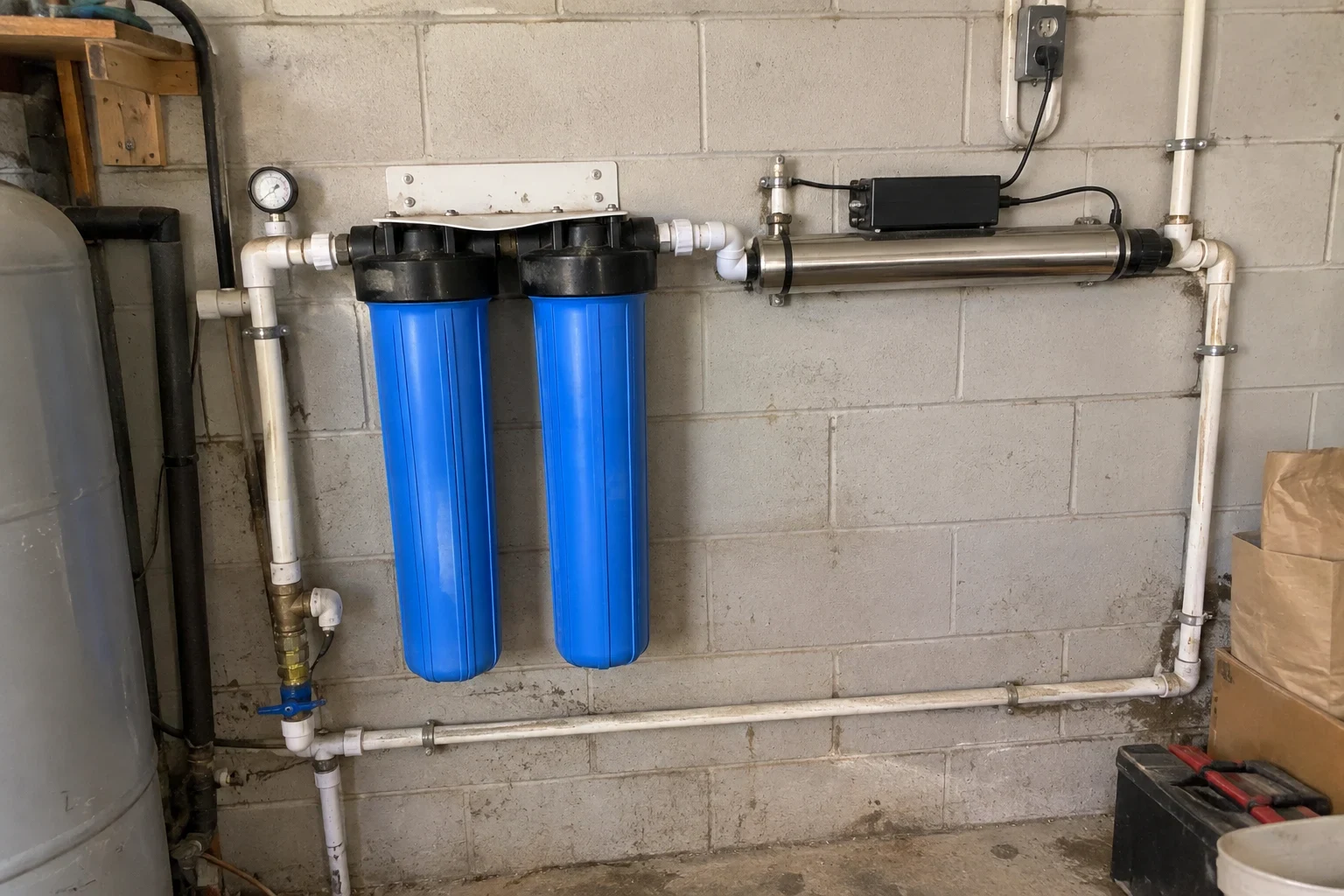
Time to replace the old system?
Let us know what equipment you have and how it is acting. We will tell you if a repair or a replacement makes more sense, and what a code-correct install involves.