Dade City Water Filtration and Softeners, Plumbed to Florida Code
We install and service whole-home filtration, water softeners, reverse osmosis and well water treatment for homes in Dade City, Zephyrhills and Wesley Chapel. Every system goes in with a bypass valve, an air gap on the drain line and the code requirements checked before we cut into your plumbing.
- Permit need checked first
- Air gap on every drain
- Bypass valve on every system
- Support after the install
Water Treatment We Install and Service
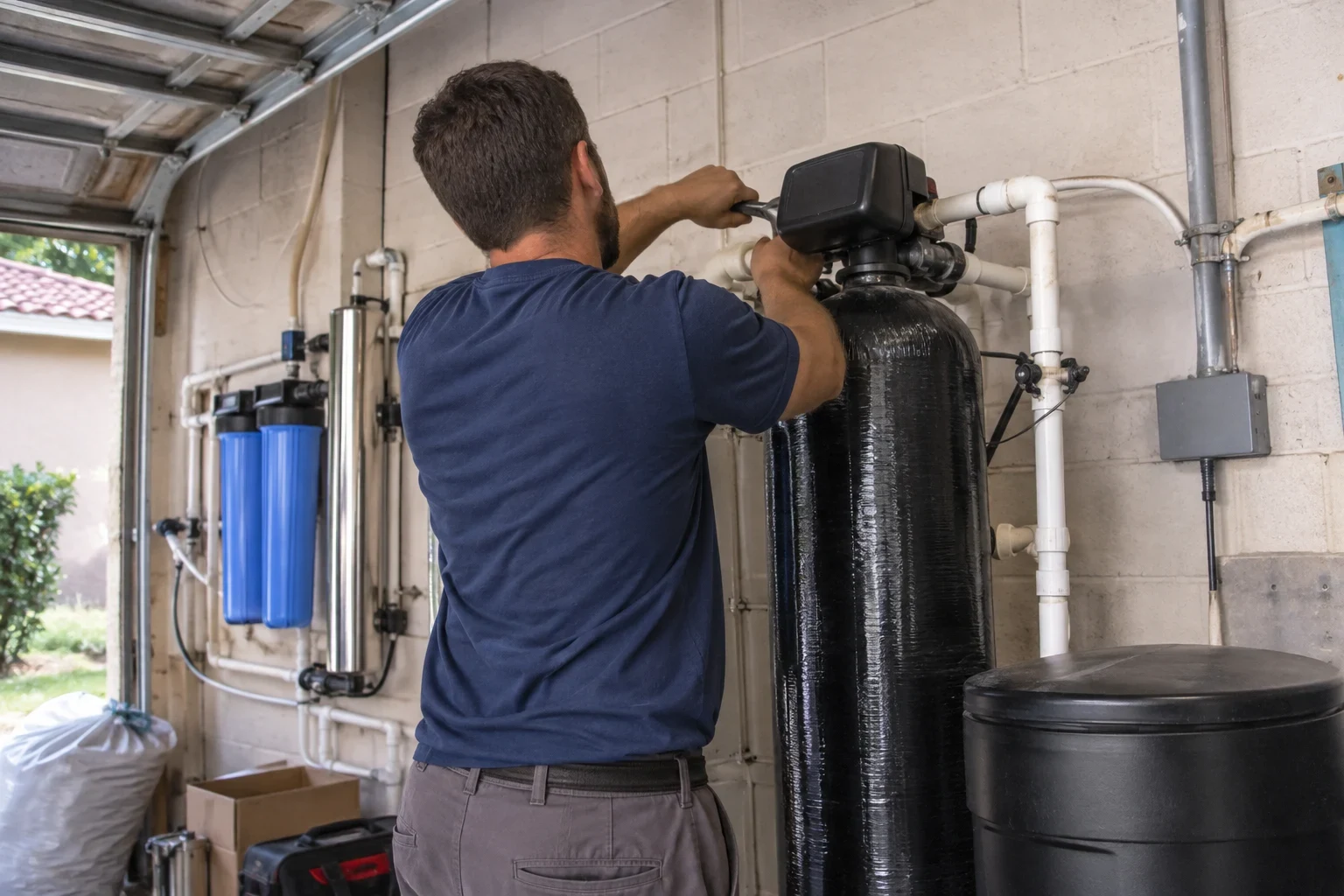
We put in whole-home filtration, water softeners, under-sink reverse osmosis and well water treatment, and we handle chlorine and chloramine removal for homes on city water. When an older unit has quit, we cover water softener and filtration system replacement, and we do water softener repair and maintenance on systems that still have years left in them. Each service page explains the parts involved, what tends to fail and what moves the price.
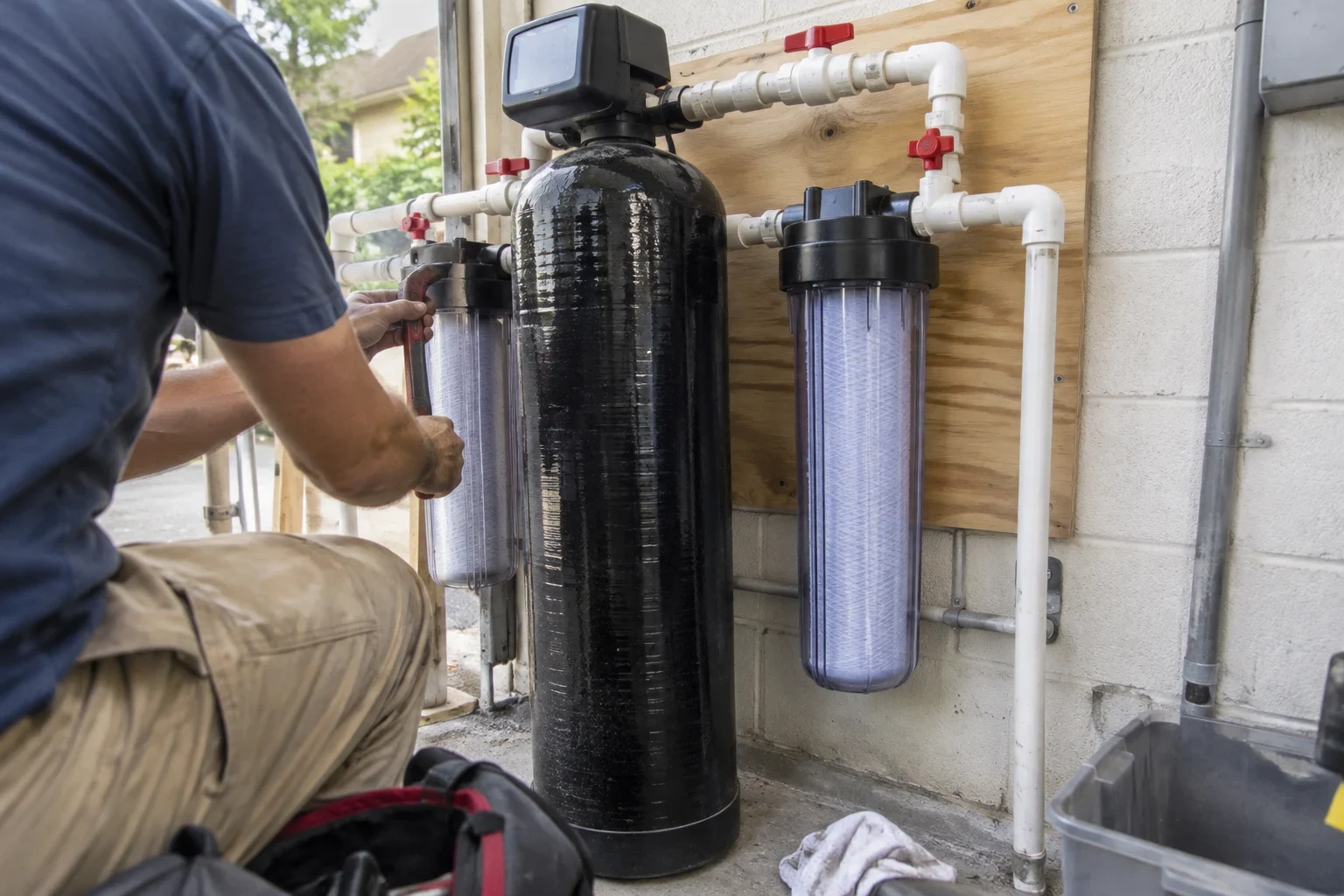
Whole-Home Filtration
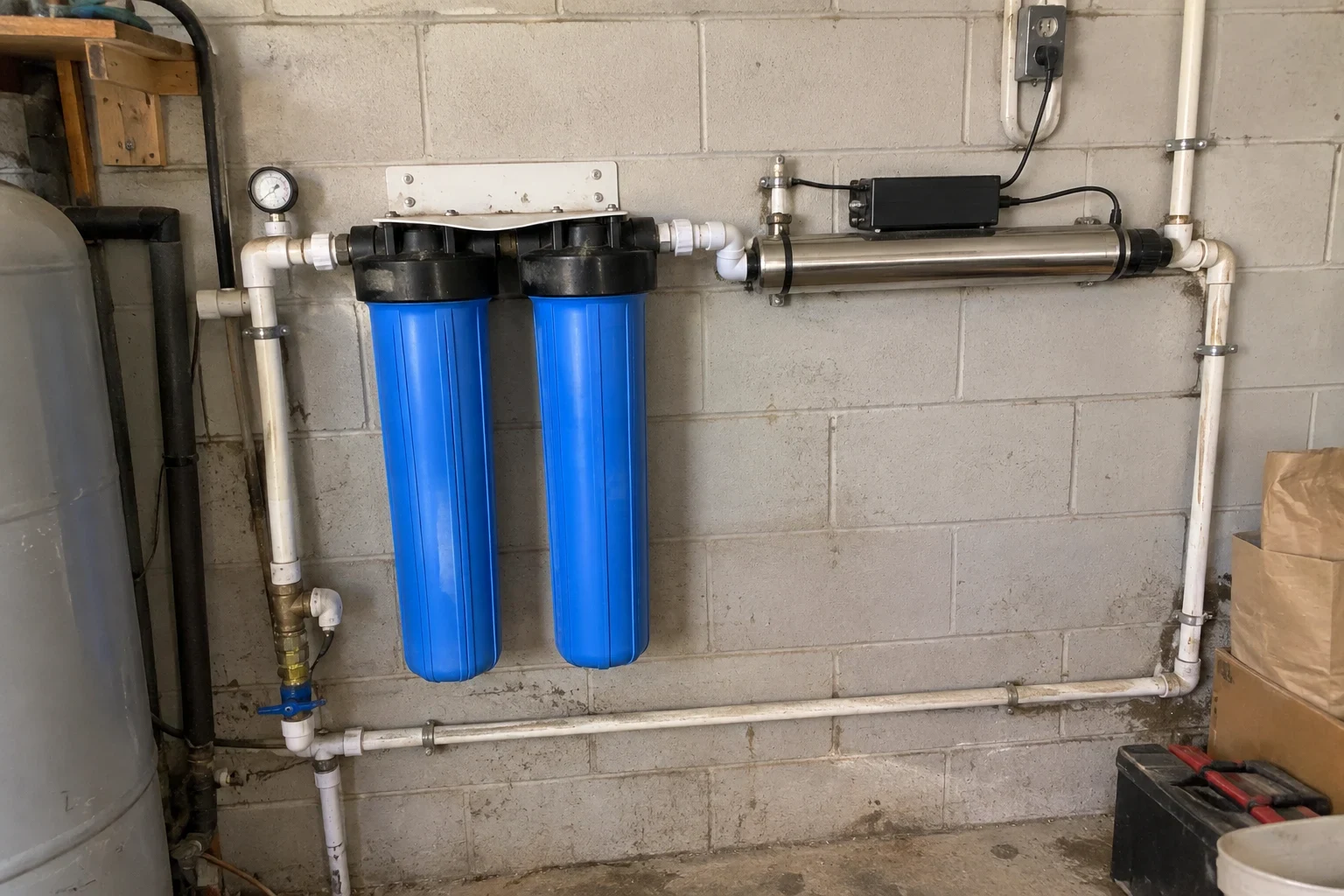
A carbon filtration system on your main water line, sized to your flow rate and plumbed with a bypass, proper drain and electrical bonding.
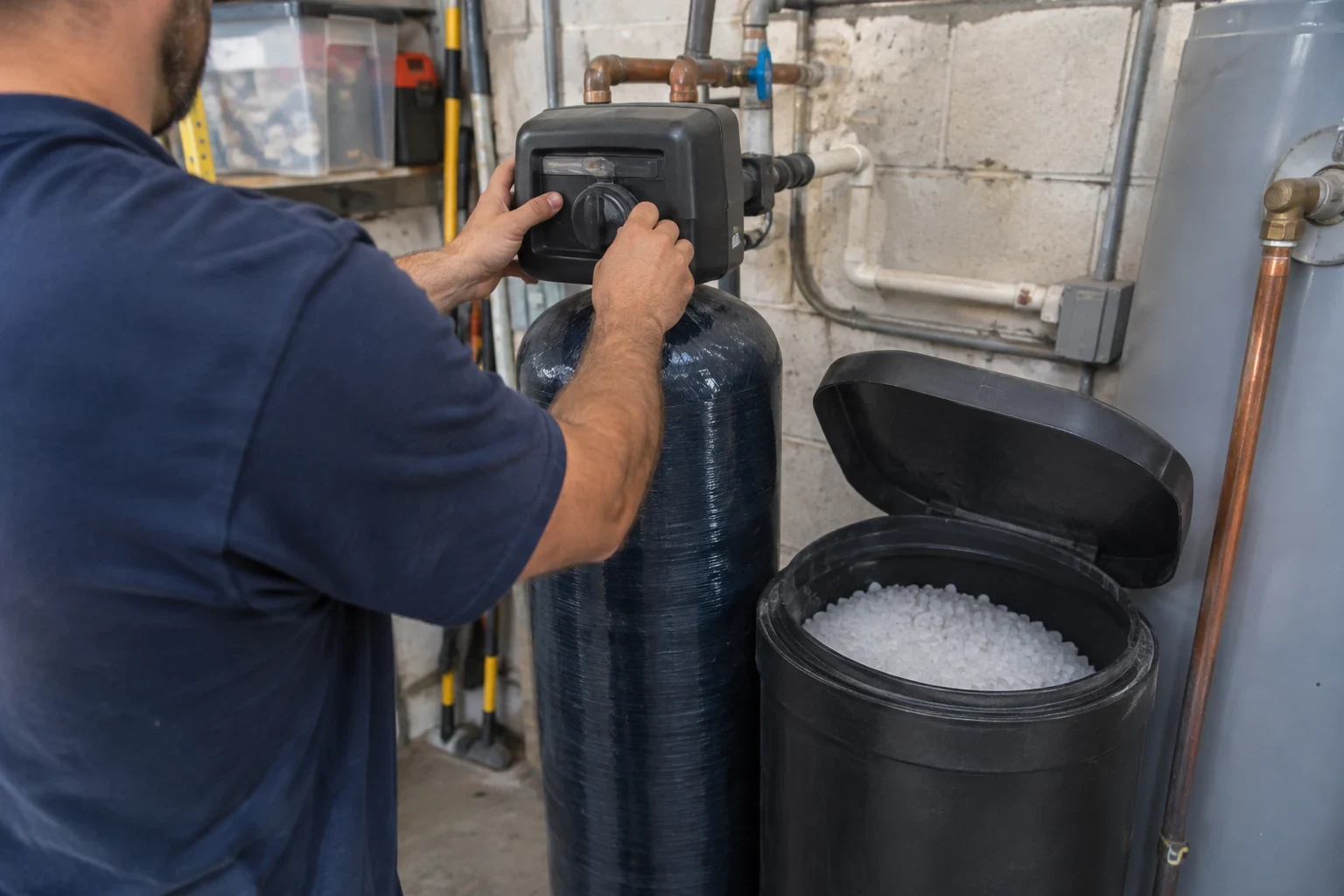
Water Softeners
Ion-exchange softeners sized to your water's hardness and plumbed with a bypass valve and an air-gapped drain line.
Reverse Osmosis
A multi-stage RO system under your kitchen sink for cleaner drinking and cooking water, plumbed with a code-correct drain connection and a dedicated faucet.
Well Water Treatment
Treatment systems for private wells that target sulfur smell, iron stains and scale, sized to your pump's flow and installed with proper drains and bypass valves.
System Replacement
Swap an aging softener or filter system for a correctly sized unit, installed with a bypass valve, a proper drain air gap and bonding wherever metal pipe is cut.
Softener Repair & Maintenance
Diagnosis and repair of control valves, brine systems and fouled resin, plus scheduled maintenance that keeps your softener regenerating on time.
Chlorine & Chloramine Removal
Whole-home carbon systems that take the bleach smell and taste out of every tap, with catalytic carbon when your utility uses chloramine.
How an Install Runs
Most installs take part of one day. Here is the order we work in.
- 1
Your call
Tell us what you are dealing with: chlorine taste, white scale on fixtures, orange staining, a rotten-egg smell from a well, or a softener that stopped regenerating. We talk through which systems fit and give you a quote by phone.
- 2
A look at the install spot
We check the main line, pipe material, drain and outlet location, and the space the tanks need. On a well we note the pressure tank and pump setup.
- 3
Code check and scheduling
We confirm what your jurisdiction requires for the job. If paperwork or an inspection is needed, we arrange it before we set a date.
- 4
Install day
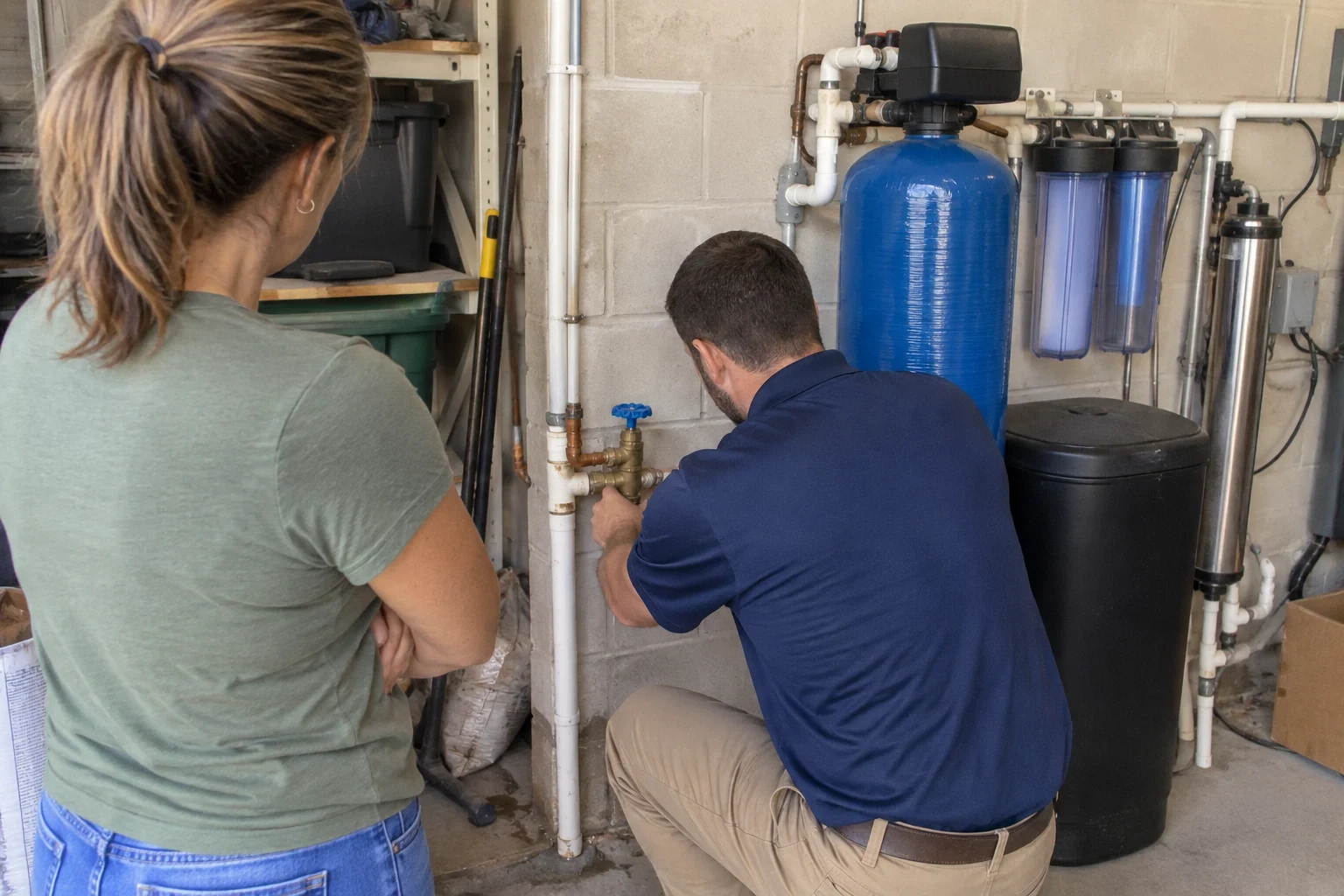
Water goes off at the main. We plumb in the bypass valve, set the tanks level, run the drain to an air gap and bond across any cut metal pipe so the electrical ground stays continuous. Then we flush the media, set the control valve and check every joint for leaks.
- 5
Handoff and inspection
We point out the bypass handles, explain how often salt or cartridges need attention, and show you how a normal regeneration cycle sounds and runs. If an inspection is on the schedule, we meet the inspector.
What Drives the Price of a System
The same equipment can cost different amounts in two different homes. The gap nearly always comes from the plumbing around the system rather than the tank. These are the things that raise or lower a quote.
We give you a quote by phone based on what you tell us, then confirm each line once we see where the system will go. If anything changes the scope, we explain it before doing any added work.
- System type and size
- An under-sink RO unit, one carbon tank and a softener paired with a filter are very different jobs. Tank size depends on your flow rate and how much water the household uses.
- Access and pipe type
- A main line on an open garage wall is quicker to cut into than one behind drywall or under a slab. Copper, CPVC, PEX and older galvanized pipe each need their own fittings, and galvanized often needs a section replaced before we can connect.
- Drain and power at the install location
- Backwashing filters and softeners need a code-compliant drain with an air gap, and most control valves need an outlet nearby. When neither is close, running them adds labor and materials.
- Pretreatment for well water
- Wells in Florida limestone can bring iron, hardness and a sulfur odor all at once. Handling more than one problem can mean added tanks, an air injection head or a different media bed.
- Inspection fees
- If the job needs a permit, the fee and the inspection visit are part of the price. We list them on their own so you see them before work begins.
- Hauling away old equipment
- Removing a failed softener, draining it and carting it off takes real labor, so it gets its own line on the price.
Where We Work
We serve homes in Dade City and Dade City North, along with Pasadena Hills, Hill 'n Dale and Ridge Manor. We also work in Zephyrhills, Zephyrhills North, Zephyrhills South and Zephyrhills West, and south into Wesley Chapel and Pebble Creek. Homes across this area run on municipal supply or on private wells, and our systems cover both.
- Dade City
- Pasadena Hills
- Dade City North
- Zephyrhills
- Zephyrhills West
- Zephyrhills South
- Ridge Manor
- Zephyrhills North
- Wesley Chapel
- Hill 'n Dale
- Pebble Creek
For an address outside this list, give us the location on the phone and we can confirm if it falls within the area we cover.
About Water Filtration Dade City
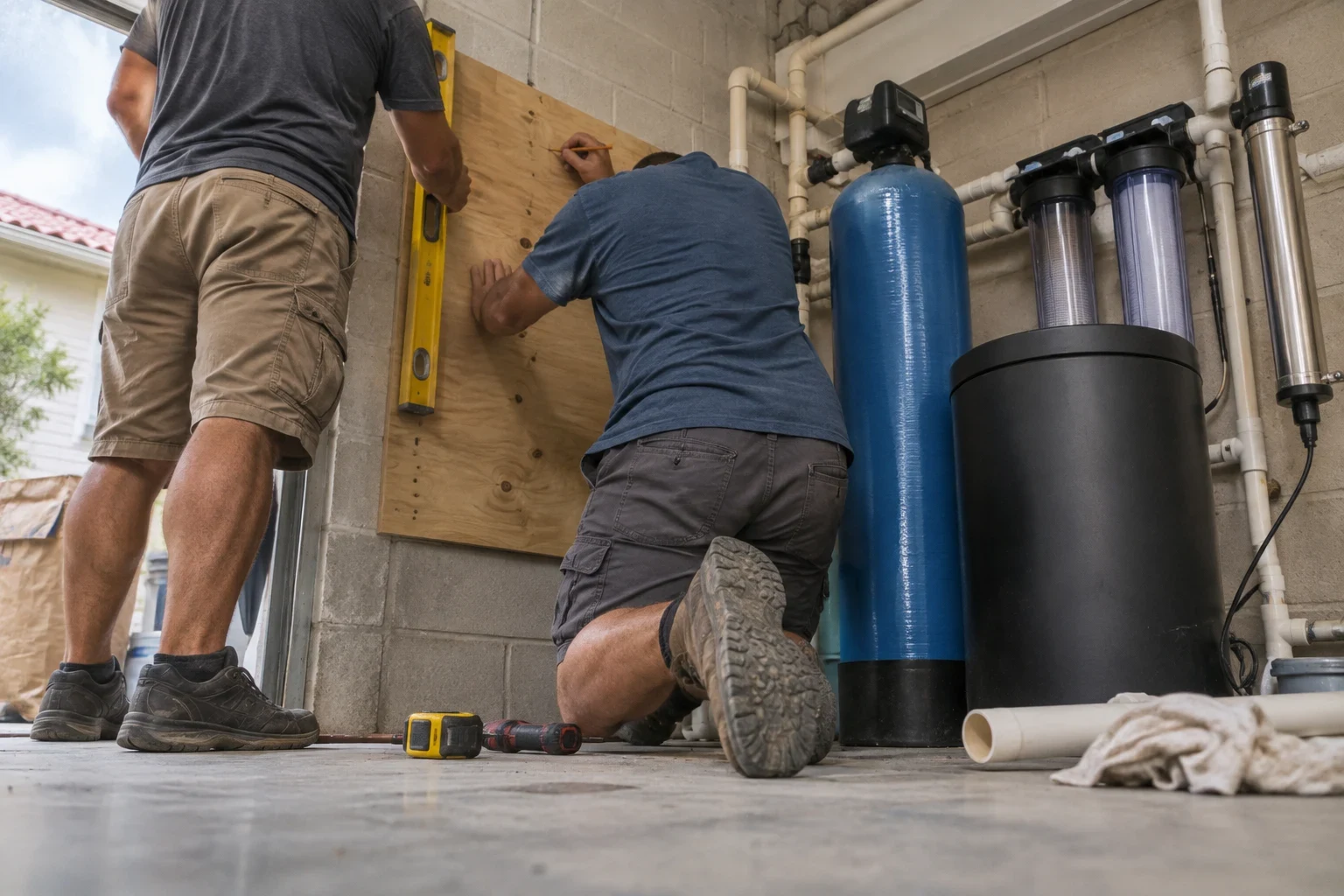
We are a local water treatment company that installs and services filters, softeners and reverse osmosis systems inside homes around Dade City. We work on both municipal water and private wells, and we explain why we pick a given media: catalytic carbon for chloramine, standard carbon for chlorine taste, cation resin for hardness, oxidizing media for iron and sulfur.
We think the plumbing matters as much as the equipment. A softener with no air gap on its drain or a filter with no bypass works fine on day one and becomes a problem later. We would rather explain the code reasons for each fitting than leave you guessing what is under the sink or in the garage.
- Warranty
- 5-year warranty on control valves and filtration media; 1-year installation workmanship warranty
Common Questions
Does a water softener or whole-home filter install need a permit?
That depends on your jurisdiction and what the job involves, such as cutting into the main line or adding a drain connection. We find out before install day so you know ahead of time. If one is needed, we take care of it and book the inspection as part of the work.
What is the air gap on the drain line for?
Softeners and backwashing filters flush rinse water to a drain several times a month, and RO units send reject water down the whole time they are making water. An air gap is an open space between the end of that line and the drain. It stops wastewater from being pulled back into the treatment system if the drain backs up, and plumbing code requires it.
Should I get a softener or only a filter?
Each fixes something different. A softener's resin removes calcium and magnesium, the minerals that leave scale on fixtures and in water heaters. A carbon filter takes out chlorine, chloramine and the tastes and odors they bring. If you have scale and a chemical taste, a combined setup may fit, and we will explain the reasoning before recommending one.
My water tastes like a swimming pool. How do I fix that?
The taste typically comes from the disinfectant your utility uses. Standard carbon removes chlorine easily, but chloramine breaks down far more slowly and needs catalytic carbon with more contact time. Our chlorine and chloramine removal page explains the difference.
How do I get rid of a sulfur smell in my well water?
A spoiled-egg odor usually means hydrogen sulfide gas, and orange stains in sinks often come with it from dissolved iron. For well water treatment we usually rely on an air injection head or an oxidizing media bed, which converts both into solid particles that the filter catches and flushes away during backwash. The system must match your pump's gallons per minute, so that is one of our first questions on the phone.
What warranty do I get with a system?
Control valves and filtration media carry a 5-year warranty, and our installation workmanship is covered for 1 year. We go through what that includes when we review your quote, so you know what you are getting before install day.
Can my old softener be repaired?
Often, yes. A worn seal kit in the control valve, a clogged injector or a stuck brine float can each keep a softener from regenerating, and all of them are fixable parts. When the resin is used up or the tank is cracked, we explain why water softener and filtration system replacement is the better value.
How We Do the Work
A filter or softener is a plumbing connection, a drain connection and often an electrical one. We treat it that way, and we tell you what each step is for.
- Paperwork sorted before install day
- Whether an install needs a permit depends on the jurisdiction and the scope of the work. We check before we schedule. When one is required, we arrange it along with the inspection, so no part of the job is left unseen by the inspector.
- Drain lines done the way code expects
- Softener regeneration water and RO reject water must empty through an air gap, not a hard connection to a drain. That gap keeps sewer water from ever siphoning back into the treatment system. We set it at the standpipe, laundry box or sink, and we secure the line so it cannot whip loose during a backwash.
- Sized to your flow, not to a brochure
- We look at your service line size, the number of bathrooms and, on a well, how many gallons per minute your pump delivers. A backwashing filter that needs more flow than the pump can give will never clean its media properly. Getting that match right is what keeps pressure steady at the shower.
- Repair before replace
- Plenty of softeners fail at a single part: a cracked injector, a worn seal kit in the control valve, a stuck brine float. We tell you when a repair makes sense and when the resin or tank is too far gone to justify one.
- Support that stays with your system
- We keep supporting you after install day with maintenance, filter replacements and any service needs that come up. Since we plumbed the system, we already know where the bypass sits and how the drain was run.
Tell Us About Your Water
Describe what is happening with your water and where your main line runs. We will tell you which system fits, what code requires and what the job will cost.