Can I Drink Softened Water in My Dade City Home?
A softener trades hardness minerals for sodium, so whether that water belongs in your glass depends on your hardness, your diet and how the system is plumbed.
Can I use softened water for drinking?
Yes, most healthy adults can drink softened water. A softener swaps calcium and magnesium for sodium, adding roughly 8 milligrams per liter for each grain of hardness removed. People on low-sodium diets, and anyone mixing infant formula, should use an unsoftened cold tap or a reverse osmosis faucet instead.
What a softener actually puts in your water
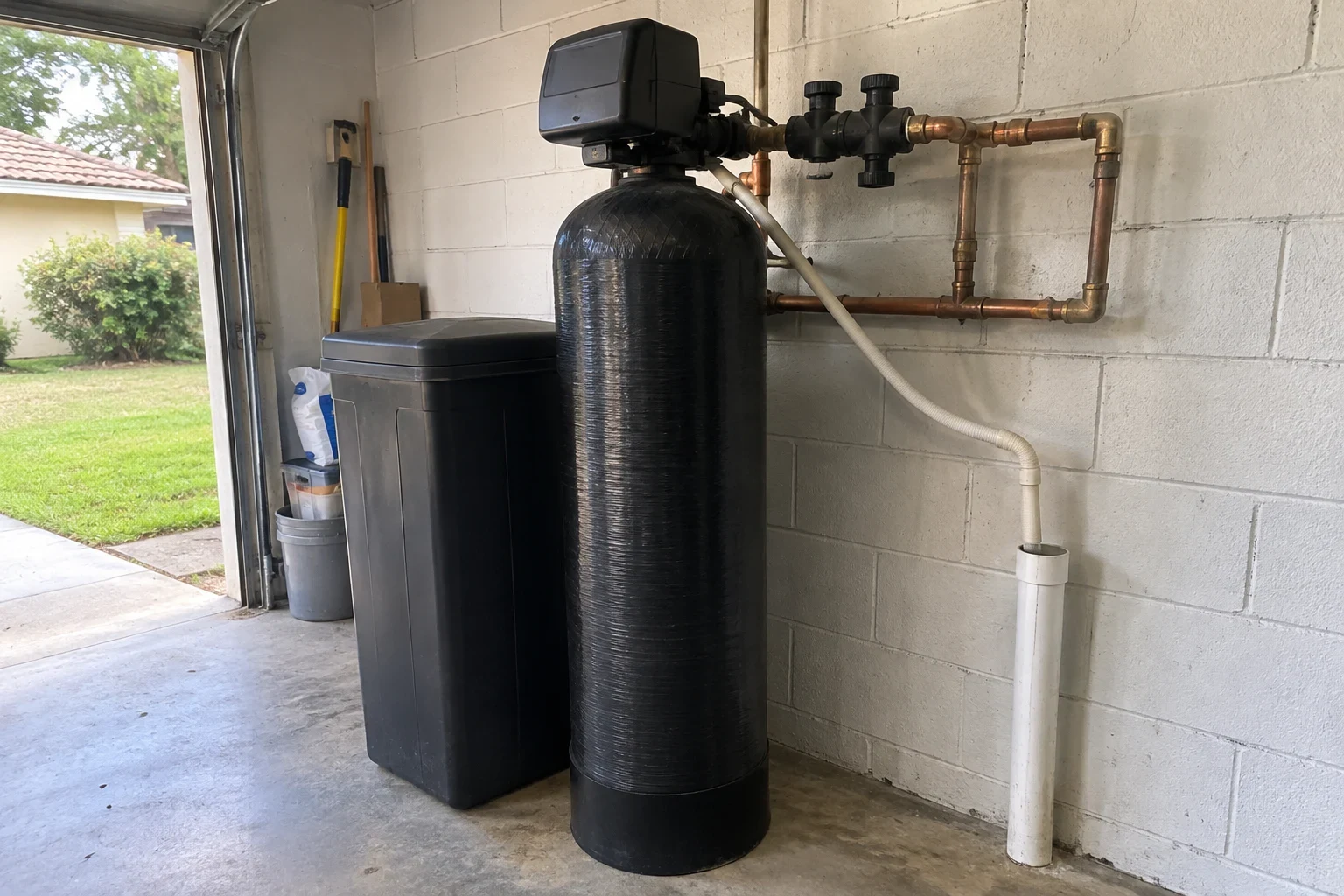
A water softener is an ion exchange unit. Inside the mineral tank, resin beads hold sodium ions. As hard water passes through, calcium and magnesium stick to the resin and sodium is released in their place. During regeneration, the control valve draws brine from the salt tank, flushes the captured hardness down the drain and recharges the beads with sodium.
The water does not taste like seawater, because the amount of sodium is small. It tracks your hardness directly: the harder your incoming water, the more sodium ends up in your home's softened lines. Groundwater drawn from Florida's limestone tends to run hard, so a softened home here can carry more sodium than one in a soft-water region.
- Each grain per gallon of hardness removed adds about 8 mg of sodium per liter
- Calcium and magnesium are removed, so softened water loses those minerals
- Chlorine, lead and most other contaminants pass through a softener untouched
Who should not drink softened water
For most adults, the sodium from softened water is a small share of what comes from food. The people who should think twice are those whose doctor has them on a sodium-restricted diet for blood pressure, heart or kidney conditions. For them, every source counts, and softened water used for drinking, coffee and cooking adds up over a day.
Infants are the other group. Some health agencies advise against mixing formula with softened water because of the added sodium. Ask your pediatrician what they recommend, and use an unsoftened or reverse osmosis tap for bottles in the meantime.
Ways to keep a separate drinking tap
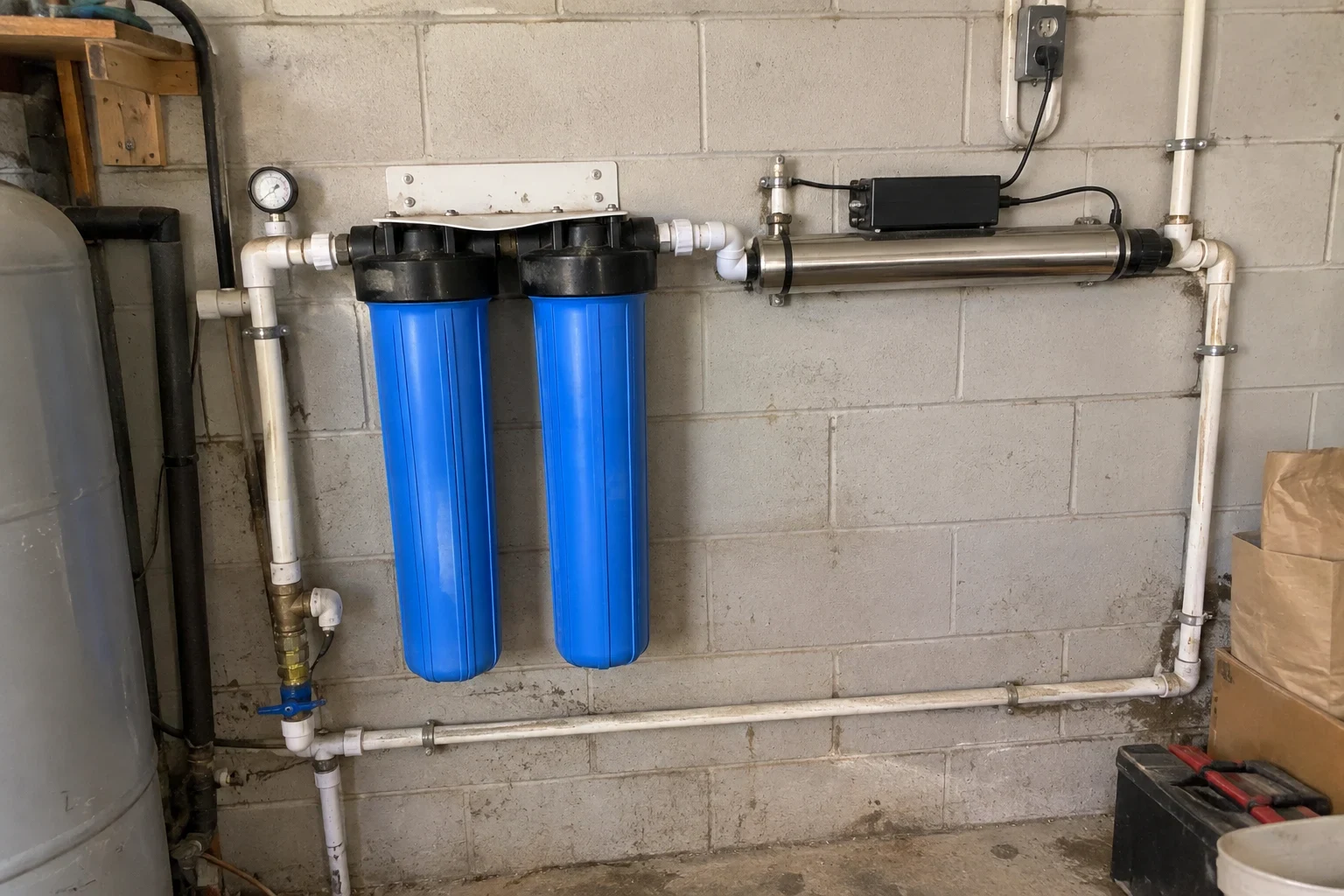
You do not have to choose between soft water in the shower and unsoftened water in the glass. The plumbing can give you both. The two common setups are a hard-water line to the kitchen cold tap, or a reverse osmosis system under the sink with its own faucet.
A hard-water bypass line means running the kitchen cold supply from a tee ahead of the softener. It is simple, but you get your untreated water at that tap, including any chlorine taste or sediment. Reverse osmosis pushes softened water through a semipermeable membrane that removes most of the sodium along with dissolved solids, lead from older fixtures and much of the chlorine taste after its carbon stages. Feeding an RO unit softened water also helps, since hardness is what scales up and shortens membrane life.
- Unsoftened cold tap: fewest parts, untreated water
- Reverse osmosis faucet: lowest sodium, needs filter and membrane changes
- Potassium chloride in the brine tank: replaces most sodium with potassium, costs more per bag
The code side of adding a drinking water line
Any change to how a softener or RO unit connects to your plumbing has code requirements behind it, and they exist for good reasons. The drain line from a softener's regeneration cycle and from an RO system must discharge through an air gap, so wastewater can never be siphoned back into your drinking supply. A softener drain hose simply jammed into a standpipe or stuffed below the waterline of a laundry sink does not meet that.
RO units usually use an air gap faucet or an approved drain saddle positioned above the trap. Rerouting supply lines to give the kitchen an unsoftened tap means cutting into existing piping, and whether that work needs a permit depends on its scope and the local jurisdiction. Where a permit is required, the work is inspected, which documents that the setup in your home meets the plumbing code.
When softened water tastes salty, something is wrong
Properly working softened water should not taste noticeably salty. If it does, the usual cause is a regeneration problem. A worn piston seal or spacer stack in the control valve, a clogged injector or a stuck brine valve can leave brine sitting in the resin bed instead of rinsing it out. Water drawn right after a regeneration then comes out briny.
Other signs include a brine tank that stays full of water, salt that never goes down or hard spots returning on fixtures. These are repair and maintenance calls, not reasons to give up on the softener. Cleaning the injector and replacing seals often brings the rinse cycle back to normal.
- Salty or brackish taste after the overnight regeneration
- Standing water high in the brine tank
- Salt level unchanged for weeks
- Scale coming back on faucets and shower glass
More questions about drinking softened water
Is softened water OK for pets and plants?
Most pets handle it fine, though an unsoftened or RO bowl is a reasonable choice for animals on special diets. For houseplants and gardens, the sodium can build up in soil over time, so an outdoor hose bib left on hard water is the usual fix.
Does boiling softened water remove the sodium?
No. Boiling drives off water and leaves the sodium behind, so it actually concentrates slightly. Only a process like reverse osmosis or distillation takes sodium out.
Should I cook with softened water?
For a few pots of pasta it makes little difference, but if anyone in your home watches sodium, use the drinking tap for cooking too. Rice and soups absorb what is in the water.
Will switching to potassium chloride change how my softener works?
It works in the same resin, but it is less efficient, so the salt setting on the control valve usually needs adjusting. We can reset it when we service the unit.
Get softened water where you want it, and drinking water where you need it
Tell us how your softener is plumbed and what is coming out of the kitchen tap. We will explain whether a hard-water line, a reverse osmosis faucet or a repair to the control valve makes sense, what the code requires for the drain and supply changes, and then set up a visit to your home. Ongoing support for maintenance, filter replacements and service needs comes with it.